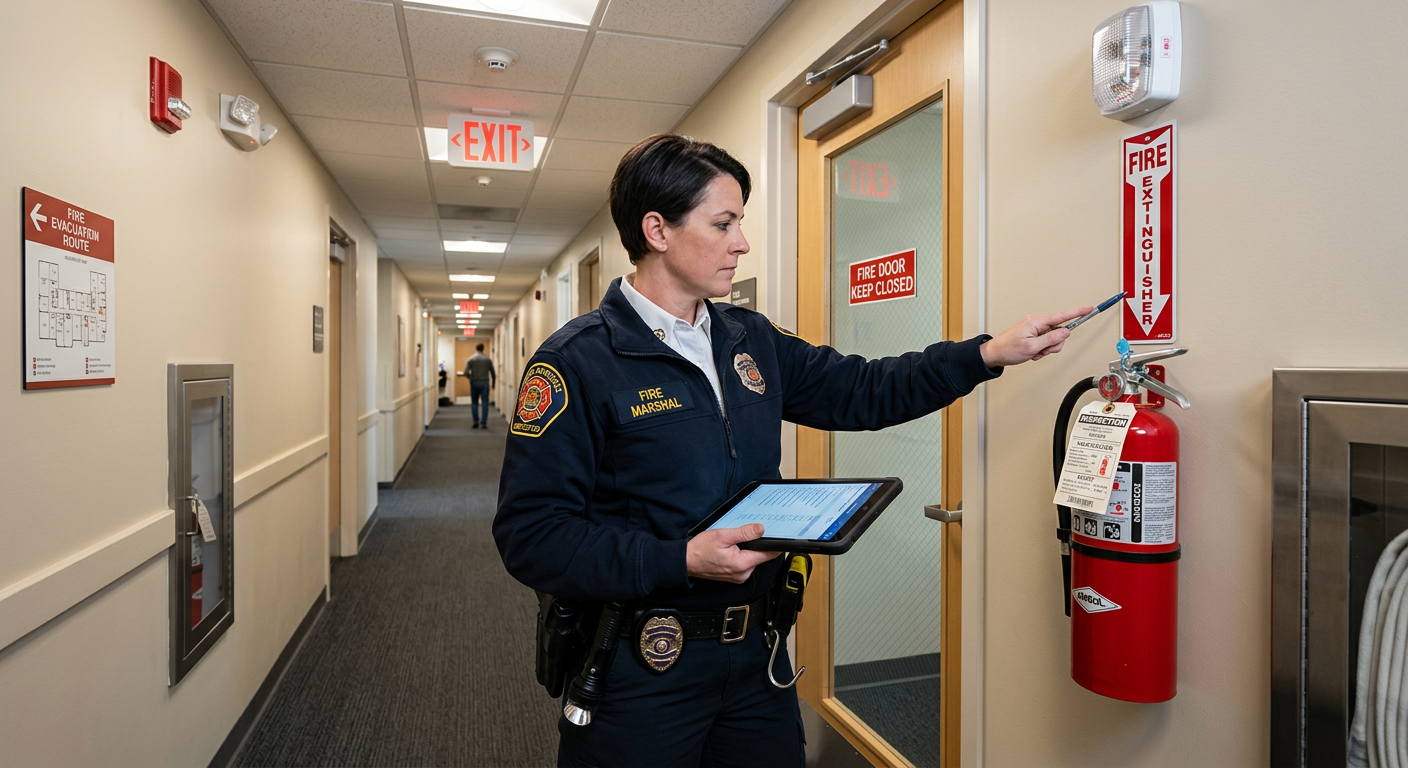
Fire inspections can be stressful—especially when you are unsure if your building is fully compliant. The most common NFPA 101 violations are often simple oversights that are easy to fix once you know what to look for.
This guide covers the most frequently cited NFPA 101 violations in commercial buildings and provides practical solutions to address them.
Section 1: Blocked or Obstructed Exits
The Violation: Exit doors, corridors, or stairwells are blocked by furniture, storage, or equipment.
Why It’s a Problem: Occupants cannot evacuate quickly during an emergency.
Code Reference: NFPA 101, Section 7.1.3.1 (Means of egress shall be kept unobstructed).
How to Fix It:
-
Conduct a weekly walkthrough to check all exit paths.
-
Use floor markings to identify keep-clear zones.
-
Train staff not to store items in corridors or stairwells.
-
Install “Do Not Block” signs where needed.

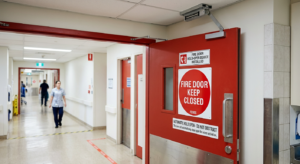
Section 2: Fire Doors Propped Open
The Violation: Fire doors are wedged or propped open with doorstops, chairs, or other objects.
Why It’s a Problem: Fire doors prevent fire and smoke from spreading. If propped open, they become useless.
Code Reference: NFPA 80, Section 6.4.4 (Fire doors must close automatically).
How to Fix It:
-
Remove all doorstops and wedges immediately.
-
Install automatic hold-open devices that close the door when the fire alarm activates.
-
Train staff to never prop fire doors open.
-
Post signage reminding occupants of the requirement.
Section 3: Missing or Illegible Exit Signs
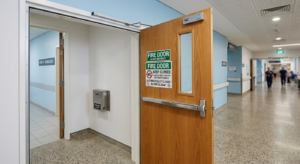
The Violation: Exit signs are missing, damaged, or not illuminated.
Why It’s a Problem: Occupants cannot locate exits in an emergency.
Code Reference: NFPA 101, Section 7.10.2 (Exit signs must be visible and illuminated).
How to Fix It:
-
Inspect all exit signs monthly.
-
Replace burnt-out bulbs or damaged signs.
-
Ensure signs are illuminated (internally or externally).
-
Install additional signs if the path of egress is not obvious.
-
Verify that signs are visible from any direction of approach.
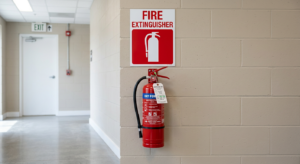
Section 4: Improper Fire Extinguisher Placement
The Violation: Fire extinguishers are missing, obstructed, or mounted at the wrong height.
Why It’s a Problem: Occupants cannot access extinguishers during a fire.
Code Reference: NFPA 10, Section 6.1.3 (Extinguishers must be accessible and mounted correctly).
How to Fix It:
-
Inspect all extinguishers for proper mounting.
-
Extinguishers weighing over 40 lbs: handle no more than 3.5 feet above the floor.
-
Extinguishers under 40 lbs: handle no more than 5 feet above the floor.
-
Ensure no objects block access to extinguishers.
-
Place visible signage indicating the extinguisher location.
Section 5: Dead or Missing Emergency Lights
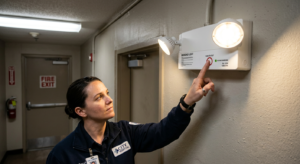
The Violation: Emergency lights are not working, have dead batteries, or are missing.
Why It’s a Problem: Occupants cannot see the path of egress during a power outage.
Code Reference: NFPA 101, Section 7.9.2 (Emergency lights must function for 90 minutes).
How to Fix It:
-
Test emergency lights monthly using the test button.
-
Conduct an annual 90-minute discharge test.
-
Replace dead batteries immediately.
-
Ensure lights are not blocked by furniture or storage.
Section 6: Missing Fire Alarm Detectors
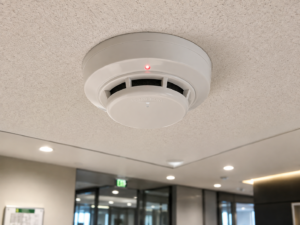
The Violation: Smoke detectors or heat detectors are missing, damaged, or not installed in required locations.
Why It’s a Problem: The fire alarm system may not detect a fire early enough.
Code Reference: NFPA 72, Section 17.7.4 (Detectors must be installed in all required locations).
How to Fix It:
-
Review the building plans to verify detector locations.
-
Ensure detectors are installed on every floor and in all corridors.
-
Check for dead spots (e.g., corners, near air vents).
-
Replace damaged or outdated detectors.
-
Test detectors annually.
Section 7: Insufficient Fire Alarm Testing Documentation
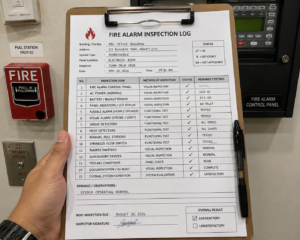
The Violation: No records of fire alarm testing, inspections, or maintenance.
Why It’s a Problem: Cannot prove compliance; may be cited for lack of documentation.
Code Reference: NFPA 72, Section 14.2.1 (Records must be maintained).
How to Fix It:
-
Keep inspection logs for all fire protection systems.
-
Document monthly visual inspections, annual tests, and battery replacements.
-
Store records for at least 3 years.
-
Use a digital system for easy access and retrieval.
Section 8: Exit Doors Not Swinging in the Direction of Exit
The Violation: Exit doors swing inward instead of outward in high-occupancy spaces.
Why It’s a Problem: During a panic, occupants may push against the door, making it impossible to open.
Code Reference: NFPA 101, Section 7.2.1.4 (Doors must swing in the direction of exit travel when serving 50+ occupants or hazardous areas).
How to Fix It:
-
Inspect all exit doors serving high-occupancy areas.
-
Identify doors that swing inward.
-
Reverse the swing or install new doors that swing outward.
-
Verify with your local AHJ.
Section 9: Missing or Outdated Fire Safety Plan
The Violation: No fire safety plan, or the plan is outdated.
Why It’s a Problem: Occupants do not know what to do in an emergency.
Code Reference: NFPA 101, Section 4.8 (Fire safety plans required for certain occupancies).
How to Fix It:
-
Create a fire safety plan if one does not exist.
-
Update the plan annually or after any building changes.
-
Train occupants on the plan.
-
Post the plan in visible locations.
-
Conduct fire drills at least annually.
Section 10: Missing or Damaged Fire-Resistant Construction
The Violation: Fire-resistant walls, floors, or ceilings have holes, gaps, or damage.
Why It’s a Problem: Fire and smoke can spread through unprotected openings.
Code Reference: IBC, Chapter 7 (Fire-resistance-rated construction).
How to Fix It:
-
Inspect fire barriers regularly.
-
Seal all penetrations with fire-rated materials (e.g., caulk, putty pads).
-
Repair any holes in drywall or fire-rated assemblies.
-
Ensure fire dampers are installed in duct penetrations.
Section 11: Summary of Common Violations
| Violation | How to Fix |
|---|---|
| Blocked exits | Clear obstructions; conduct weekly inspections. |
| Fire doors propped open | Remove wedges; install hold-open devices. |
| Missing exit signs | Install illuminated signs; inspect monthly. |
| Improper extinguisher placement | Mount at correct height; keep visible. |
| Dead emergency lights | Test monthly; replace batteries. |
| Missing detectors | Install in all required locations; test annually. |
| No documentation | Keep detailed inspection logs. |
| Wrong door swing | Reverse inward-swinging doors. |
| Outdated fire safety plan | Update annually; train occupants. |
| Damaged fire barriers | Seal penetrations; repair holes. |
Conclusion
NFPA 101 violations are often simple oversights that are easy to correct. By addressing these common issues, you can:
-
Avoid fines and citations.
-
Ensure occupant safety.
-
Reduce liability.
-
Pass inspections with confidence.
Take Action Today:
-
Conduct a self-inspection of your building.
-
Create a checklist of common violations.
-
Prioritize fixes based on risk.
-
Schedule a professional inspection if needed.