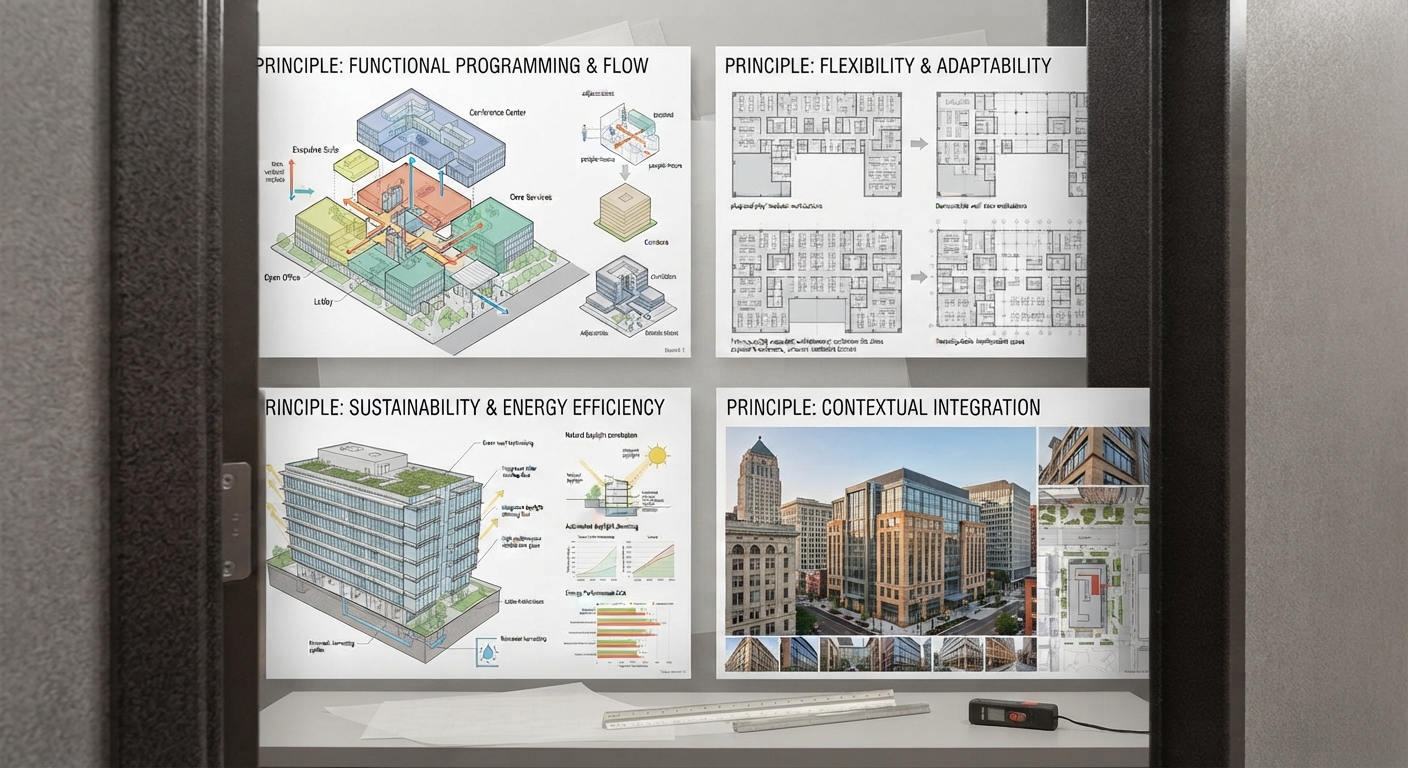
When it comes to commercial real estate, a building’s design is not just about aesthetics—it is about profitability.
A well-designed building commands higher rent, attracts premium tenants, and sells for a significantly higher price than a poorly designed counterpart.
Here are 5 architectural design principles that directly impact commercial property value.
1. Natural Light Optimization
Tenants are willing to pay a premium for spaces filled with natural light. Studies link daylight exposure to measurable gains in employee wellbeing and productivity, with one widely cited workplace study finding a 15% increase in reported wellbeing and creativity and a 6% increase in productivity [1].
Architectural Strategy: Use large, energy-efficient windows, glass curtain walls, and strategically placed skylights. Designing with an open floor plan also allows light to penetrate deeper into the interior.
ROI: Buildings with strong natural light access tend to be more attractive to tenants and can support faster lease-up times, though the effect varies by market [1].
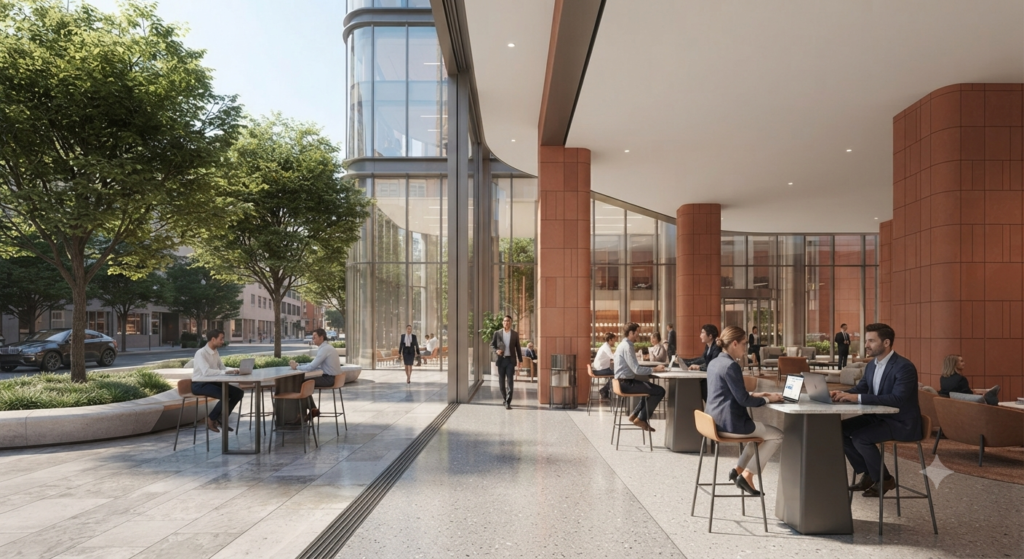
2. Flexible Floor Plans
Modern tenants want spaces that can adapt to their changing needs. Fixed walls and rigid layouts are becoming obsolete.
Architectural Strategy: Design with modular interior walls, minimal structural columns, and open-span construction. This allows tenants to easily reconfigure the space for open offices, private offices, or collaborative zones.
ROI: Flexible spaces command higher rent because they reduce tenant fit-out costs and allow quicker move-ins.
3. Sustainable Materials and Systems
Sustainability is no longer a “nice-to-have”—it is a requirement. LEED-certified office buildings command an average rent premium of roughly 4% over non-certified buildings, with the premium historically ranging from 4–8% depending on market conditions [2].
Architectural Strategy: Incorporate recycled materials, low-VOC paints, energy-efficient HVAC systems, and green roofs. Even small choices, like installing energy-efficient lighting, make a difference.
ROI: Lower utility costs for tenants and measurably higher building valuations for owners [2].
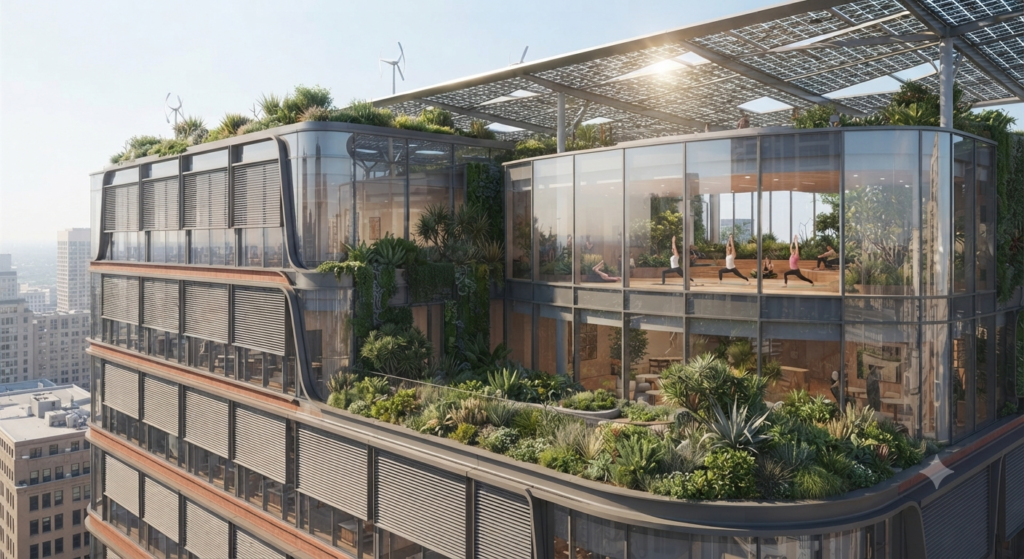
4. Inviting Entrance and Lobby
First impressions are everything in commercial real estate. A dated or uninviting lobby can turn potential tenants away before they even tour the space.
Architectural Strategy: Use high-quality finishes, modern lighting fixtures, and comfortable seating areas. Consider adding artwork, greenery, and clear wayfinding signage to create a welcoming atmosphere.
ROI: Lobby renovations can improve tenant retention and first impressions, though the return depends heavily on the property and market.
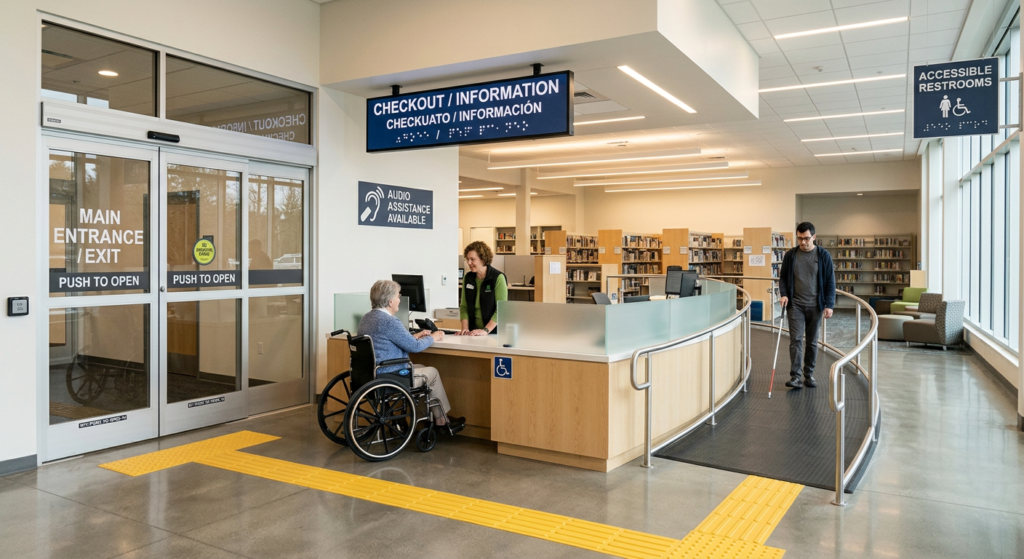
5. Accessible Design (ADA Compliance)
Accessibility is not just a legal requirement—it is good design. Wide doorways, ramps, accessible restrooms, and clear circulation paths are essential.
Architectural Strategy: Incorporate universal design principles from the beginning. Ensure entrances are at grade level or have well-designed ramps. Include accessible parking spots closest to the entrance.
ROI: Accessible buildings attract a wider range of tenants and avoid costly retrofits later.
Final Thought
Commercial architecture is an investment, not an expense. By incorporating these five principles, property owners can create spaces that tenants love, buyers desire, and investors value.
Want to learn more about optimizing commercial interiors? Stay tuned for our next article on building code compliance.
References & Notes
[1] Human Spaces, “The Global Impact of Biophilic Design in the Workplace”; Cornell University / View, Inc. daylight workplace study, 2018.
[2] CBRE Research, “Green Is Good: The Enduring Rent Premium of LEED-Certified U.S. Office Buildings,” 2022–2023, based on analysis of 20,600 U.S. office buildings.