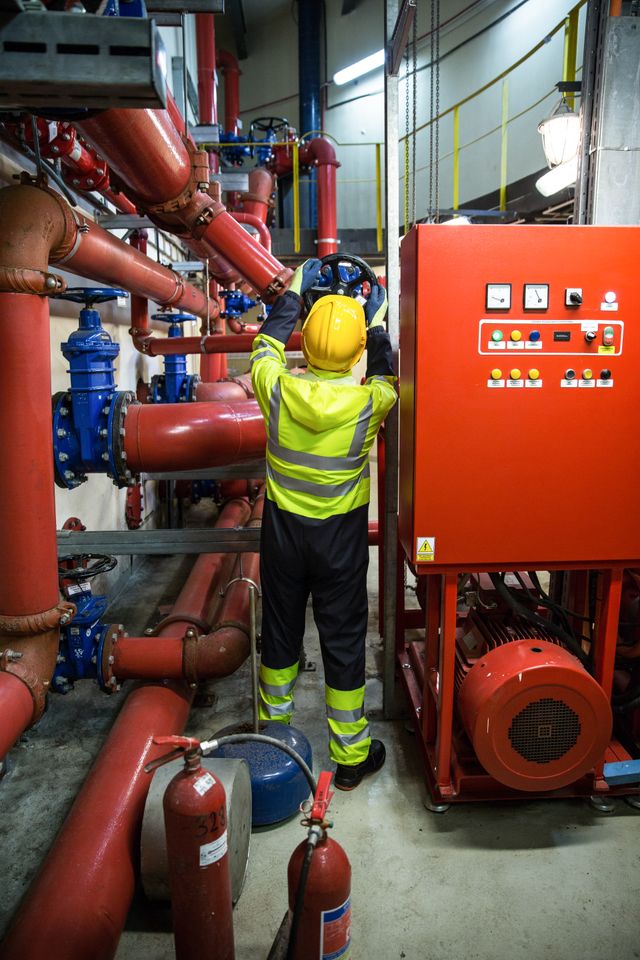
A fire safety system is only as good as its maintenance. Regular inspections, testing, and preventative maintenance ensure that your fire protection systems—sprinklers, alarms, extinguishers, emergency lighting, and fire doors—will function when needed.
Neglecting maintenance can lead to system failure, code violations, and tragic consequences. This guide covers best practices for maintaining all fire safety systems in commercial buildings.

Section 1: The Importance of Fire Safety Maintenance
| Reason | Why It Matters |
|---|---|
| Life Safety | Ensures systems operate during a fire. |
| Code Compliance | Required by NFPA, IBC, and local codes. |
| Liability Reduction | Demonstrates due diligence. |
| Cost Savings | Prevents costly repairs and replacements. |
| Insurance Requirements | Many policies require documented maintenance. |
| Tenant Confidence | Demonstrates commitment to safety. |
Pro Tip: Document all maintenance activities—records are essential for compliance and may be requested by inspectors.

Section 2: Fire Sprinkler System Maintenance
NFPA 25 provides detailed requirements for sprinkler system inspection, testing, and maintenance (ITM).
| Activity | Frequency | Procedure | Code Ref. |
|---|---|---|---|
| Visual Inspection | Monthly | Check control valves, pressure gauges, and for visible damage. | NFPA 25, 5.2 |
| Flow Test | Annually | Test water flow from a test header. | NFPA 25, 5.3 |
| Valve Exercise | Quarterly | Open and close all control valves (to prevent sticking). | NFPA 25, 5.4 |
| Sprinkler Head Check | Annually | Check for damage, corrosion, or paint on heads. | NFPA 25, 5.6 |
| Full System Test | Annually | Test all system components. | NFPA 25, 5.5 |
| Internal Pipe Inspection | 5–10 Years | Check for corrosion, scale, or obstructions. | NFPA 25, 14.2 |
Common Violations:
-
Painted or damaged sprinkler heads.
-
Control valves closed or locked incorrectly.
-
Missing escutcheons (cover plates).
-
Blocked or obstructed sprinkler heads (less than 18-inch clearance).
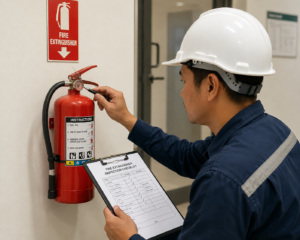
Section 3: Fire Extinguisher Maintenance
NFPA 10 covers portable fire extinguisher requirements, including maintenance.
| Activity | Frequency | Procedure | Code Ref. |
|---|---|---|---|
| Visual Inspection | Monthly | Check pressure gauge (green zone), visible damage, and pin/seal. | NFPA 10, 7.2 |
| Maintenance Check | Annually | Professional inspection of mechanical parts; refilling if needed. | NFPA 10, 7.3 |
| Hydrostatic Testing | 5–12 Years | Pressure testing to ensure cylinder is safe for use. | NFPA 10, 8.3 |
| Recharging | After use or when needed. | Refill if discharged or damaged. | NFPA 10, 7.5 |
Pro Tip: Ensure that extinguishers are not obstructed and are clearly visible.
Section 4: Fire Alarm System Maintenance
NFPA 72 covers fire alarm system inspection, testing, and maintenance.
| Activity | Frequency | Procedure | Code Ref. |
|---|---|---|---|
| Visual Inspection | Weekly/Monthly | Check control panel for trouble signals and visible damage. | NFPA 72, 14.2 |
| Functional Test | Annually | Test each detector, pull station, and notification appliance. | NFPA 72, 14.4 |
| Battery Test | Annually | Test secondary power under load. | NFPA 72, 10.5 |
| Full System Test | Annually | Simulate a fire alarm condition; verify all components operate correctly. | NFPA 72, 14.4 |
| Central Station Monitoring Test | Annually | Verify signal transmission to the monitoring station. | NFPA 72, 26.1 |
Common Violations:
-
Dead or missing batteries.
-
Blocked or missing detectors.
-
Unrepaired trouble signals.
-
Missing documentation.
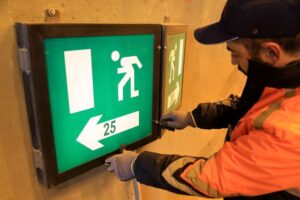
Section 5: Emergency Lighting and Exit Sign Maintenance
NFPA 101 requires regular testing and maintenance of emergency lighting and exit signs.
| Activity | Frequency | Procedure | Code Ref. |
|---|---|---|---|
| Visual Inspection | Monthly | Check lights are on, clean, and not blocked. | NFPA 101, 7.9.3 |
| Functional Test | Monthly | Press test button; ensure lights illuminate. | NFPA 101, 7.9.3 |
| Full Duration Test | Annually | Simulate power failure for 90 minutes. | NFPA 101, 7.9.3 |
| Exit Sign Inspection | Monthly | Ensure signs are illuminated and not blocked. | NFPA 101, 7.10.4 |
Pro Tip: Document all tests and keep records for at least 3 years.
Section 6: Fire Door Maintenance
NFPA 80 covers fire door inspection, testing, and maintenance.
| Activity | Frequency | Procedure | Code Ref. |
|---|---|---|---|
| Visual Inspection | Monthly | Check for visible damage, proper closing, and intact labels. | NFPA 80, 6.2 |
| Operational Test | Annually | Open and close the door; verify it latches automatically. | NFPA 80, 6.4 |
| Drop Test | Annually | Test hold-open devices release when the alarm activates. | NFPA 80, 6.4 |
| Full Inspection | Annually | Professional inspection of all components. | NFPA 80, 6.2 |
Common Violations:
-
Fire doors propped open.
-
Missing or illegible labels.
-
Damaged or missing door closers.
-
Excessive clearance gaps.
Section 7: Fire Safety Plan Maintenance
A fire safety plan is a living document that must be reviewed and updated regularly.
| Trigger for Update | Action |
|---|---|
| Annual Review | Review the entire plan; update outdated information. |
| Building Renovations | Update floor plans; adjust evacuation routes. |
| Change in Occupancy | Update occupant load; revise procedures. |
| New Fire Protection Systems | Update system descriptions and locations. |
| Change in Personnel | Update roles and contact information. |
| After an Incident | Review and improve based on lessons learned. |
Pro Tip: Assign a single person (fire safety director) to be responsible for maintaining the plan.
Section 8: Record Keeping and Documentation
Documentation is essential for compliance and liability protection.
| Document | Purpose | Retention |
|---|---|---|
| Inspection Logs | Record all inspections. | At least 3 years. |
| Test Reports | Record all tests and results. | At least 3 years. |
| Maintenance Records | Record all repairs and replacements. | At least 3 years. |
| Training Records | Document training and drills. | At least 3 years. |
| Fire Safety Plan | Living document. | Current version always available. |
Section 9: Common Mistakes and How to Avoid Them
| Mistake | Why It’s a Problem | How to Fix |
|---|---|---|
| Skipping monthly visual inspections | Minor issues become major problems. | Assign a person to conduct monthly inspections. |
| Not testing systems annually | Systems may fail when needed. | Schedule annual tests well in advance. |
| Blocking sprinklers or extinguishers | Systems cannot function. | Keep areas clear; post signage. |
| No documentation | Cannot prove compliance. | Maintain thorough records. |
| Not updating the fire safety plan | Information becomes outdated. | Review and update the plan annually. |
| Using unqualified contractors | Improper maintenance. | Use licensed, qualified fire protection contractors. |
Conclusion
Maintaining fire safety systems is not optional—it is a critical responsibility that protects lives, property, and your business. By following these best practices, you can ensure that your systems are ready when needed.
Your 30-Day Maintenance Checklist:
-
Monthly: Visual inspections of sprinklers, extinguishers, alarms, exits, and signs.
-
Quarterly: Exercise control valves.
-
Annually: Full testing of all systems (sprinklers, alarms, extinguishers, lights).
-
Ongoing: Update the fire safety plan; conduct training and drills.
-
Document: Keep records of all activities.