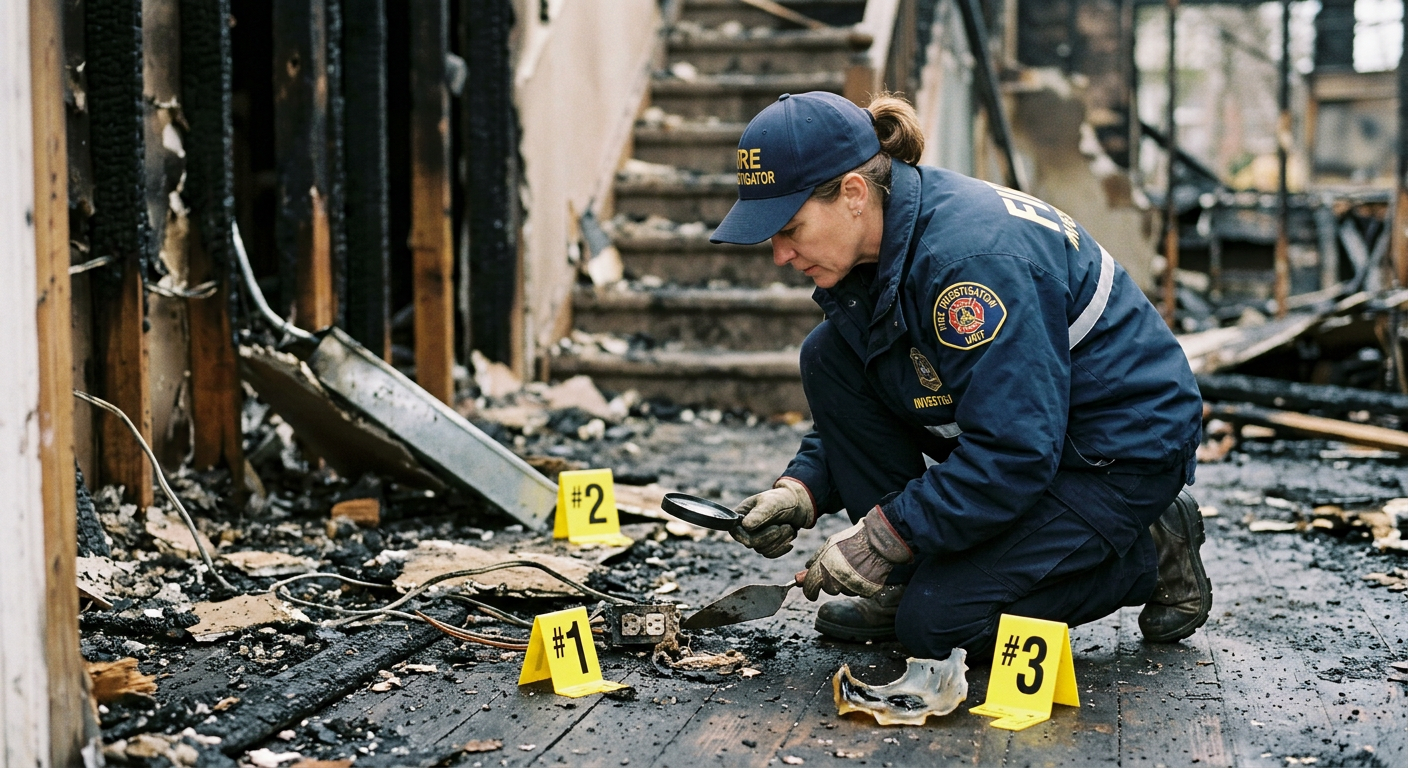
A post-fire investigation is not just about determining what happened—it is about preventing it from happening again. When a fire occurs in a commercial building, the investigation serves multiple critical purposes: identifying the origin and cause, documenting damage, supporting insurance claims, and, most importantly, extracting lessons to prevent recurrence.
This guide covers the essential steps in conducting a post-fire investigation, documenting findings, and implementing lessons learned.
Section 1: The Purpose of Post-Fire Investigations
A post-fire investigation serves several critical functions.
| Purpose | Why It Matters |
|---|---|
| Determine Origin and Cause | Establishes where and why the fire started. |
| Document Damage | Provides a record for insurance claims and remedial works. |
| Identify System Failures | Evaluates why fire protection systems may have failed to operate effectively. |
| Support Legal Proceedings | Provides evidence for potential subrogation or liability claims. |
| Prevent Recurrence | Extracts lessons to prevent future incidents. |
| Improve Safety | Identifies gaps in training, procedures, or building design. |
Pro Tip: A thorough investigation is essential for preventing similar incidents and protecting against liability.
Section 2: The Scientific Method in Fire Investigation
The scientific method is the foundation of professional fire investigation. NFPA 921, Guide for Fire and Explosion Investigations, provides the roadmap for scientific investigation methods used to formulate fact-based opinions on incident origin, cause, and responsibility [1]. The methodology includes:
| Step | Description |
|---|---|
| Data Collection | Gathering all relevant information from the scene, interviews, and documentation. |
| Data Analysis | Analyzing the collected data to identify patterns and potential hypotheses. |
| Hypothesis Formulation | Developing potential explanations for the origin and cause of the fire. |
| Hypothesis Testing | Testing each hypothesis against the case data and the principles of science. |
| Determination | Concluding the origin and cause of the fire if one and only one hypothesis survives testing. |
Pro Tip: The first determination made in a fire investigation is the origin of the fire—that is, where the fire started. Fire origin hypotheses are developed from the analyzed data, and each hypothesis is tested against the principles of science.
Section 3: The Investigation Process
The investigation process can be broken down into three main phases.
A. Pre-Scene Investigation
| Activity | Description |
|---|---|
| Initial Response | Secure the scene and ensure safety. |
| Documentation Review | Gather building plans, fire safety plans, and previous inspection records. |
| Witness Interviews | Interview occupants, employees, and first responders. |
| System Data Retrieval | Retrieve data from fire alarms, sprinkler systems, and other monitoring systems. |
B. On-Scene Investigation
| Activity | Description |
|---|---|
| Scene Documentation | Photograph and videotape the entire scene. |
| Evidence Collection | Collect and preserve physical evidence. |
| Fire Pattern Analysis | Analyze fire patterns to determine the area of origin. |
| System Evaluation | Inspect fire protection systems (sprinklers, alarms, extinguishers). |
| Damage Assessment | Assess structural, thermal, smoke, and water damage. |
C. Post-Scene Investigation
| Activity | Description |
|---|---|
| Laboratory Testing | Send samples to a fire laboratory for analysis. |
| Document Analysis | Review insurance policies, financial statements, and business records. |
| Report Preparation | Prepare a final investigation report. |
| Lessons Learned | Identify recommendations for prevention. |
Section 4: Documenting the Investigation
Proper documentation is essential for a credible investigation. The Bureau of Fire Protection in the Philippines, for example, requires a comprehensive set of substantiating documents for a final investigation report [2]:
| Document Type | Examples |
|---|---|
| Official Records | Spot Investigation Report, Progress Investigation Report. |
| Financial Documents | Affidavit of loss, insurance policies, income tax returns, financial statements. |
| Business Documents | Mayor’s permit, business license, occupancy permit, SEC registration. |
| Building Records | Approved floor, building, and electrical plans, lease contract, land title. |
| Employee Records | Complete list of employees. |
| Evidence | Photographs of the fire scene, Fire Laboratory Services Report. |
| Witness Statements | Sworn statements of witnesses. |
Fire Incident Report Template Structure:
| Section | Content |
|---|---|
| Header | Date, time, location, GPS coordinates, department, room. |
| Incident Type | Building fire, vehicle fire, alarm activation, evacuation, obstructed exit routes, extinguisher discharge. |
| Details | People involved, problems identified, fire brigade attendance. |
| Evidence | Photographs, observations, and notes. |
Section 5: Common Failures in Fire Protection Systems
A critical part of post-fire investigation involves evaluating whether fire protection systems performed as intended.
Sprinkler System Effectiveness:
According to an NFPA report, sprinkler systems were effective in 89% of fires large enough to trigger them, with fire spread limited to the room or object of origin in the large majority of reported cases (NFPA’s own figures vary by report year, generally in the 94–97% range) [3]. However, sprinkler systems failed to operate in roughly 8% of reported structure fires large enough to activate them and operated ineffectively in a further small percentage of cases [3].
| Cause of Failure | Description |
|---|---|
| System Shutdowns | The system was off or shut down at the time of the fire. |
| Manual Intervention | Deliberate actions, such as disabling the system. |
| Damaged Components | Damage to system parts preventing proper operation. |
| Neglected Maintenance | Without regular upkeep, systems may not function as intended. |
| Inappropriate System | Using the wrong type of system for the specific fire situation. |
| Agent Delivery Issues | Fire suppression agent fails to reach the flames or insufficient agent is discharged. |
Pro Tip: Evaluating the performance of fire protection systems is essential for understanding why a fire spread and identifying potential subrogation opportunities.
Section 6: Real-World Case Study – New Zealand International Convention Centre
The NZICC fire provides a powerful example of a complex post-fire investigation [4]. On October 22, 2019, while construction was nearing 80% completion, the roof caught fire. The nature of the roof design prevented firefighters from fully extinguishing the fire until ten days later, leading to extensive structural, thermal, smoke, and water damage throughout the building’s fourteen levels.
Key Lessons Learned:
| Lesson | Application |
|---|---|
| Complex Investigation | The investigation involved multiple experts across all aspects of the building. |
| Structural Integrity | Full-scale, in-situ proof testing of roof trusses was required to verify structural adequacy. |
| Remediation Challenges | The multi-year remediation process included reconstructing the damaged structure, evaluating new coating and fire protection systems, and replacing architectural systems and finishes. |
| Fire vs. Water Damage | Distinguishing between fire and water damage was critical for insurance claims. |
Section 7: Implementing Lessons Learned
The ultimate goal of any investigation is to prevent recurrence. Lessons learned should be documented and implemented.
Key Steps in Implementing Lessons Learned:
| Step | Action |
|---|---|
| 1. Identify Findings | Document the root causes and contributing factors. |
| 2. Develop Recommendations | Create specific, actionable recommendations. |
| 3. Assign Responsibility | Assign responsibility for implementing each recommendation. |
| 4. Set Timelines | Establish deadlines for completion. |
| 5. Monitor Implementation | Track progress and ensure completion. |
| 6. Share Lessons | Communicate lessons learned to relevant stakeholders. |
Section 8: Design Checklist
Use this checklist to conduct a thorough post-fire investigation:
| Item | Status | Notes |
|---|---|---|
| Secure the Scene | ☐ | Ensure safety and preserve evidence. |
| Document the Scene | ☐ | Photographs, videos, and sketches. |
| Collect Evidence | ☐ | Physical evidence and samples. |
| Review Building Records | ☐ | Plans, inspection records, and maintenance logs. |
| Evaluate Fire Protection Systems | ☐ | Sprinklers, alarms, and extinguishers. |
| Interview Witnesses | ☐ | Occupants, employees, and first responders. |
| Determine Origin and Cause | ☐ | Using NFPA 921 methodology. |
| Prepare Investigation Report | ☐ | Document findings and recommendations. |
| Implement Lessons Learned | ☐ | Recommendations assigned and tracked. |
Section 9: Common Mistakes and How to Avoid Them
| Mistake | Why It’s a Problem | How to Fix |
|---|---|---|
| Incomplete Documentation | Missing evidence for insurance or legal proceedings. | Use a comprehensive checklist. |
| Ignoring Fire Protection System Failures | Misses opportunities to identify root causes. | Evaluate all fire protection systems thoroughly. |
| Not Preserving Evidence | Evidence may be lost or contaminated. | Secure the scene and preserve evidence. |
| Jumping to Conclusions | May lead to incorrect findings. | Use the scientific method and test hypotheses. |
| Failing to Implement Lessons Learned | Similar incidents may recur. | Assign responsibility and track implementation. |
Conclusion
A post-fire investigation is a critical tool for understanding what happened, why it happened, and how to prevent it from happening again. By following a systematic approach based on NFPA 921, documenting findings thoroughly, and implementing lessons learned, you can protect your building, your occupants, and your organization.
Take Action Today:
- Familiarize yourself with NFPA 921 and the scientific method for fire investigation.
- Develop a post-fire investigation plan for your organization.
- Document all findings thoroughly using standard templates.
- Evaluate fire protection systems to identify potential failures.
- Implement lessons learned to prevent recurrence.
References & Notes
[1] NFPA 921, Guide for Fire and Explosion Investigations — establishes the scientific-method framework for determining fire origin, cause, and responsibility.
[2] Bureau of Fire Protection (Philippines) — documentation requirements for fire investigation reports, as an example of a jurisdiction-specific documentation standard.
[3] NFPA, “U.S. Experience with Sprinklers” — sprinkler systems operated and were effective in 89% of fires considered large enough to activate them (verified figure); fire spread limited to the room of origin has been reported in the 94–97% range depending on the report year and dataset. Sprinklers failed to operate in roughly 8% of qualifying fires, most commonly because the system had been shut off before the fire.
[4] Case study drawn from published post-fire investigation accounts of the New Zealand International Convention Centre (NZICC) fire, Auckland, 22 October 2019 (SGH Engineers; Fire and Emergency New Zealand Fire Investigation Report; Fire Technology, Springer, 2023 post-fire structural evaluation). Correction: the original article stated the fire took “four days” to fully extinguish. Independent sources — including Fire and Emergency New Zealand’s official investigation report and the engineering case study this section is drawn from — consistently state the fire burned for approximately ten days before being fully extinguished. This has been corrected above. The fire was determined to be accidental, caused by a cardboard roll of roofing membrane that smoldered after inadvertent exposure to a worker’s gas torch.
Continue Reading from Our Series:
- Read more about: How to Write Effective Fire Safety Reports and Documentation
- Learn more: How to Design and Implement a Fire Safety Training Program
- Related guide: How to Conduct a Fire Risk Assessment