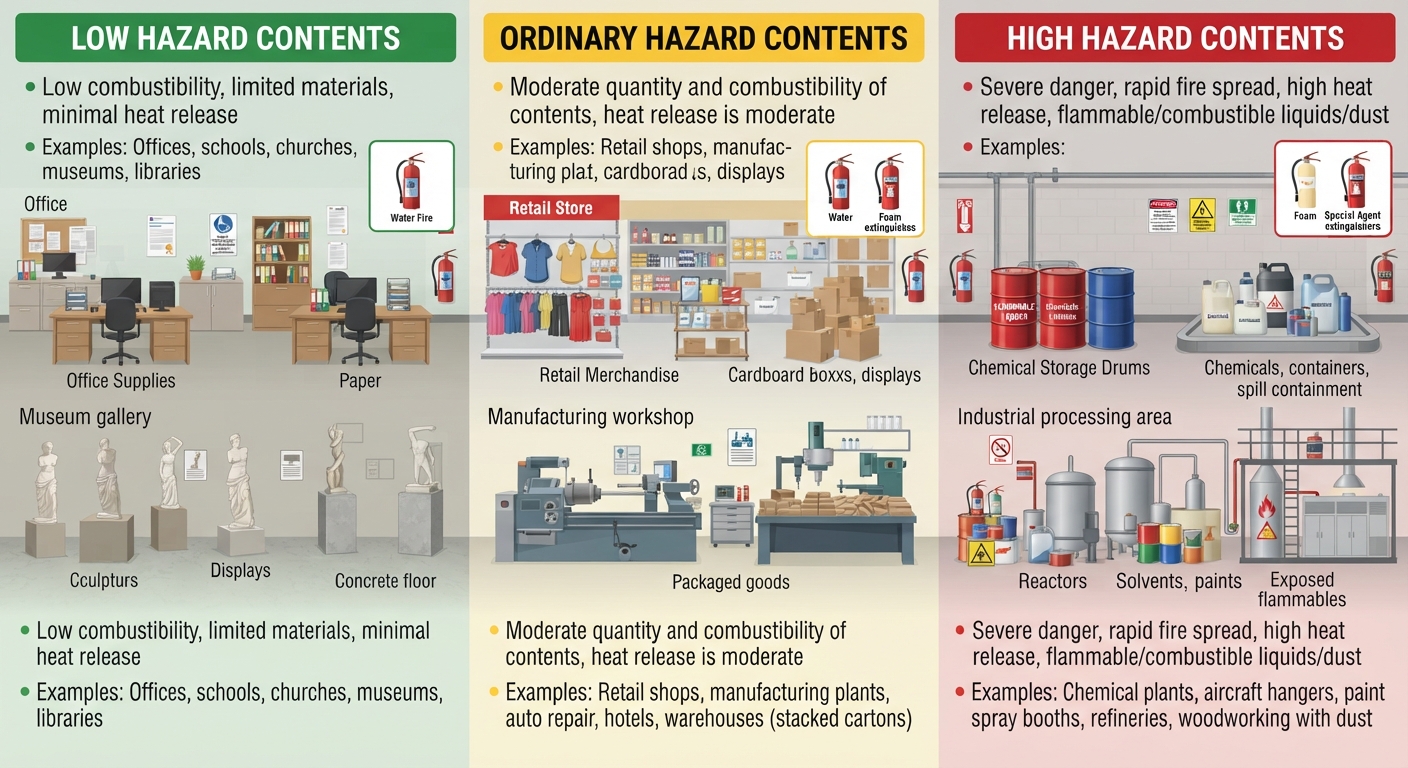
The hazard of contents is a fundamental concept in NFPA 101, the Life Safety Code. It determines many aspects of building design, including:
-
Construction type requirements.
-
Sprinkler system requirements.
-
Travel distance limits.
-
Fire extinguisher placement.
-
Separation requirements.
NFPA 101 classifies the hazard of contents into three categories:
-
Low Hazard
-
Ordinary Hazard
-
High Hazard
This guide explains each classification and the protection requirements for hazardous areas.
Section 1: What Is Hazard of Contents? (NFPA 101, 6.2)
The hazard of contents is the classification of the materials and contents within a building based on their potential to contribute to a fire.
| Hazard Level | Definition |
|---|---|
| Low Hazard | Contents are of such low combustibility that no self-propagating fire can occur. |
| Ordinary Hazard | Contents are likely to burn with moderate rapidity or to give off a considerable volume of smoke. |
| High Hazard | Contents are likely to burn with extreme rapidity or from which explosions are likely. |
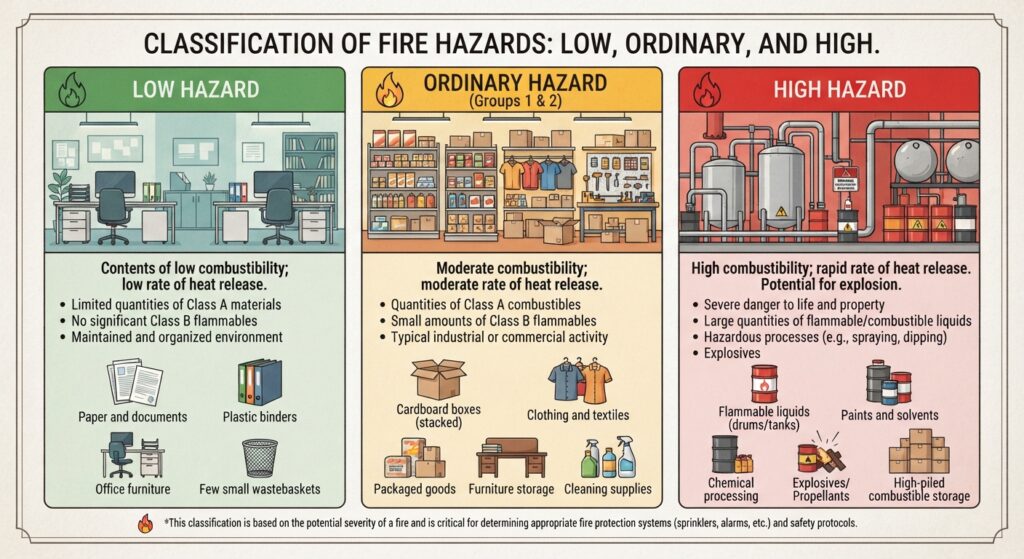
Section 2: Examples of Each Hazard Classification
| Hazard Level | Examples |
|---|---|
| Low Hazard | Church seating areas, corridors, office areas, dwelling units, toilet rooms, break rooms, patient rooms, hotel guest rooms, lobbies, dining room seating areas, meeting rooms, ballrooms (not used for exhibitions). |
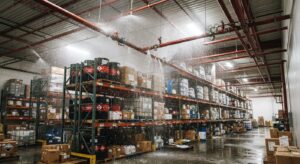
| Ordinary Hazard | Parking garages, kitchens, mechanical rooms, storage rooms, retail stores, warehouses, elevator machine rooms, electrical rooms, soiled utility rooms, clean utility rooms, laboratories (depending on amounts of flammable/combustible liquids), ballrooms used for exhibition purposes. |
| High Hazard | Saw mills, plywood/particle board manufacturing, furniture upholstering using foam plastics, flammable liquid spraying, mobile home manufacturing. |
Pro Tip: The hazard classification is based on the contents, not the building construction. A building can be constructed of non-combustible materials but still have high hazard contents.
Section 3: Why Hazard Classification Matters
The hazard classification affects many aspects of building design:
| Design Element | Impact of Hazard Classification |
|---|---|
| Construction Type | Higher hazard may require more fire-resistant construction. |
| Sprinkler Requirements | Higher hazard may require sprinklers. |
| Travel Distance | Higher hazard often has shorter travel distance limits. |
| Fire Extinguisher Placement | Higher hazard may require more extinguishers. |
| Separation Requirements | Higher hazard may require separation from other areas. |
| Means of Egress | Higher hazard may require additional exits. |
Section 4: Hazardous Areas Protection (NFPA 101, 8.7)
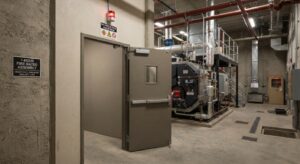
Hazardous areas are specific spaces within a building that contain materials or equipment with a higher fire risk. These include:
-
Boiler rooms
-
Mechanical rooms
-
Electrical rooms
-
Kitchens
-
Laundries
-
Storage rooms
-
Laboratories
Protection Requirements for Hazardous Areas:
| Occupancy Type | Requirement | Code Reference |
|---|---|---|
| Ambulatory | 1-hour rated wall assembly and sprinkler system; doors shall be self-closing. | 20.3.2, 38.3.2, 9.2.3 |
| Business (Sprinklered) | 1-hour rated wall assembly and sprinkler system; kitchen shall be protected as per NFPA 96. | 38.3.2.1, 8.7.1 |
| Healthcare | 1-hour rated wall assembly and sprinkler system. | Table 18.3.2.1, 8.7.1 |
| Educational | 1-hour rated wall assembly or sprinkler system; kitchen shall be protected as per NFPA 96. | 14.3.2.1, 8.7 |
| Hotels & Dormitories | 1-hour rated wall assembly and sprinkler system. | Table 28.3.2.2.2 |
| Apartments | 1-hour rated wall assembly and sprinkler system. | Table 30.3.2.1.1 |
| Mercantile | 1-hour rated wall assembly and sprinkler system; kitchen shall be protected as per NFPA 96. | 36.3.2.1 |
| Storage | No requirements. | 42.3.2 |
Section 5: Special Considerations
Kitchen Protection (NFPA 96):
Commercial kitchens must be protected in accordance with NFPA 96 (Standard for Ventilation Control and Fire Protection of Commercial Cooking Operations).
Electrical Rooms (NFPA 13):
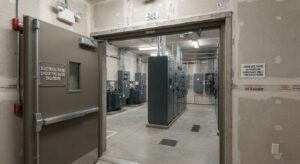
Sprinklers are not required in electrical equipment rooms where all of the following conditions are met (NFPA 13, 8.15.10.3):
| Condition | Details |
|---|---|
| 1. Dedicated to electrical equipment only. | Only dry-type electrical equipment is used. |
| 2. Equipment is installed in a 2-hour fire-rated enclosure. | Including protection for penetrations. |
| 3. No combustible storage is permitted. | — |
Section 6: Common Mistakes and How to Avoid Them
| Mistake | Why It’s a Problem | How to Fix |
|---|---|---|
| Misclassifying the hazard | Applies the wrong requirements. | Carefully classify the hazard of contents. |
| Not protecting hazardous areas | Fire can spread from hazardous areas. | Ensure hazardous areas are properly separated. |
| Not providing self-closing doors | Fire can spread through open doors. | Ensure all hazardous area doors are self-closing. |
| Ignoring occupancy-specific requirements | Different occupancies have different requirements. | Always check the specific occupancy chapter. |
| Not verifying with AHJ | Local amendments may differ. | Always confirm with your local Authority Having Jurisdiction. |
Section 7: Quick Reference – Hazard Classification
| Hazard Level | Definition | Examples |
|---|---|---|
| Low | No self-propagating fire can occur. | Offices, corridors, hotel guest rooms. |
| Ordinary | Burns with moderate rapidity or gives off considerable smoke. | Kitchens, retail stores, warehouses. |
| High | Burns with extreme rapidity or explosions are likely. | Manufacturing with flammable materials. |
Conclusion
Understanding hazard classification is essential for designing safe, code-compliant buildings. By correctly classifying the hazard of contents and protecting hazardous areas, you can ensure the safety of occupants and property.
Take Action Today:
-
Identify the hazard classification of all areas in your building.
-
Check protection requirements for hazardous areas.
-
Ensure self-closing doors are provided on hazardous areas.
-
Verify with your local AHJ for any amendments.
Continue Reading from Our NFPA 101 Series:
-
Read more about: Occupancy Separation Requirements
-
Learn more: Subdivision of Building Spaces and Smoke Compartments
-
Related guide: NFPA 101 Means of Exit Requirements