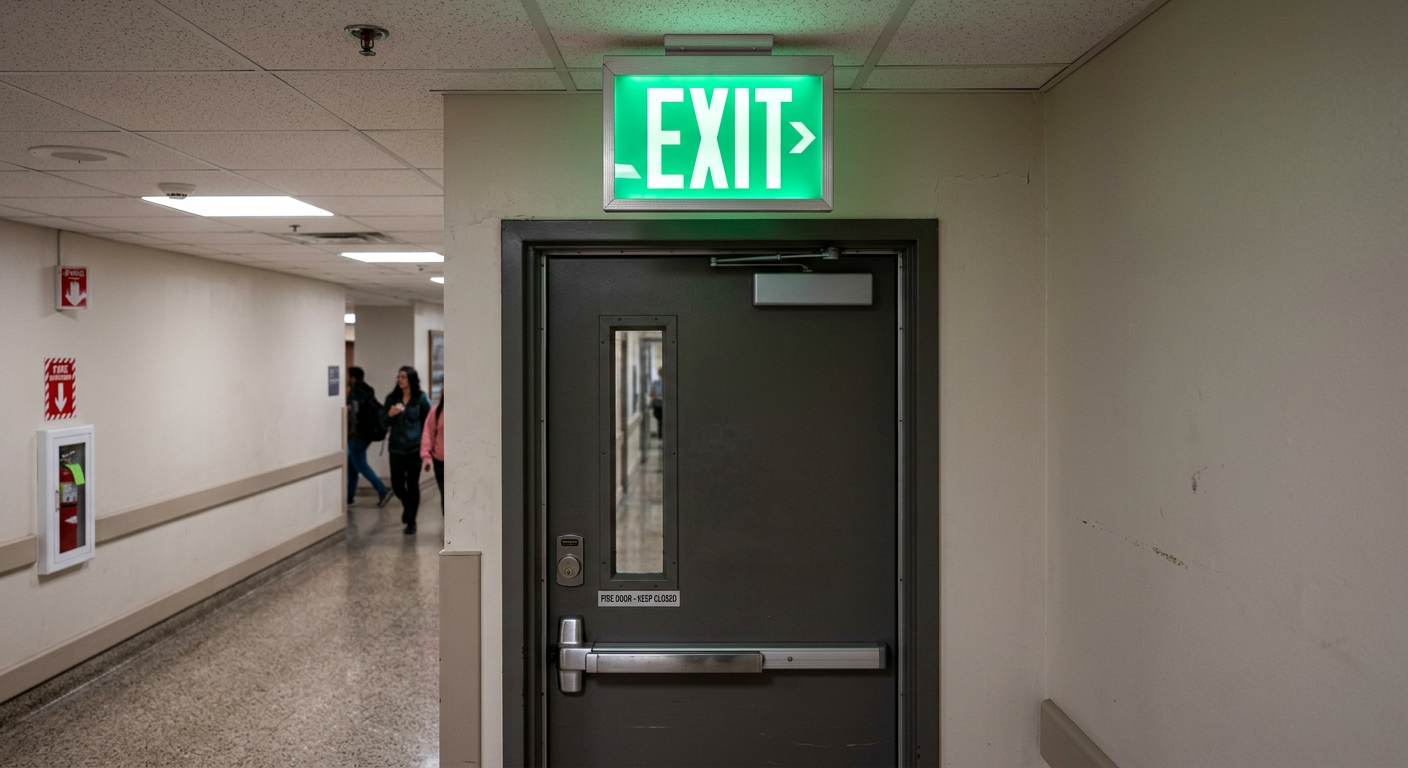
Understanding the required number of means of exit is critical for building safety and NFPA 101 compliance. This quick-reference table summarizes the minimum number of exits required for different occupancy types based on the Life Safety Code.
Always verify with your local authorities and the latest edition of NFPA 101 for complete requirements.
Required Number of Means of Exit by Occupancy Type
| Occupancy Type (New Building) | Code Reference | Number of Means of Exit |
|---|---|---|
| AMBULATORY (Sprinklered or Not Sprinklered) | (20.2.4 and 7.4) | Minimum Two (2) |
| ASSEMBLY (Sprinklered or Not Sprinklered) | (12.2.4 and 7.4) | Minimum Two (2) for occupant loads of 50 or more |
| BUSINESS (Sprinklered or Not Sprinklered) | (38.2.4 and 7.4) | Minimum Two (2) on every storey. Single exit permitted only in limited cases — e.g., ≤3 storeys with ≤30 occupants per storey and ≤100 ft travel (38.2.4.4), or a sprinklered two-storey single-tenant building with ≤100 ft travel (38.2.4.6). |
| HEALTHCARE | (18.2.4 and 7.4) | Minimum Two (2) on every storey |
| EDUCATIONAL | (14.2.4 and 7.4) (14.2.5.4) | Minimum Two (2) on every storey. Room shall have at least Two (2) doors if area > 93 sqm or Occupant Load > 50 persons. |
| ONE & TWO FAMILY DWELLINGS | (N/A) | No Requirements |
| HOTELS AND DORMITORIES | (28.2.4 and 7.4) | Minimum Two (2) on every storey |
| APARTMENTS | (30.2.4 and 7.4) | Minimum Two (2). Single exit permitted only for buildings of ≤4 storeys with ≤4 dwelling units per storey, fully sprinklered, ≤35 ft travel from a unit door to the exit, with 1-hour-rated stair and corridor enclosure. |
| MERCANTILE | (36.2.4 and 7.4) | Minimum Two (2) on every storey. Single exit permitted only in a Class C store (≤3,000 sq ft, one storey) with ≤100 ft travel, fully sprinklered (36.2.4.4). |
| STORAGE | (42.2.4 and 7.4) | Single Exit allowed in Low hazard occupancy. Single Exit allowed in Ordinary hazard occupancy on condition that distance to exit is within the permitted Common Path of Travel distance. Minimum Two (2) if otherwise the above. |
| INDUSTRIAL | (40.2.4.1.1) | Minimum Two (2) on every storey and not less than one exit shall be reached without traversing another storey. |
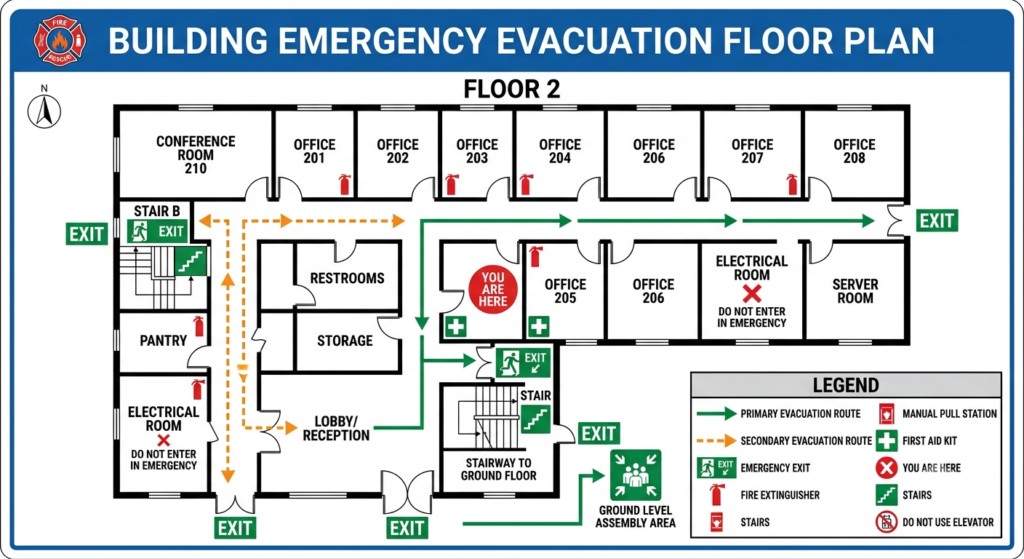
NFPA 101 – 7.4.1.2
The number of Room Exits or Storey Exits, other than for existing buildings permitted in Chapters 12 through 42, shall be as follows:
| Occupant Load | Minimum Number of Exits |
|---|---|
| More than 500 but not more than 1000 | Not less than 3 |
| More than 1000 | Not less than 4 |
NFPA Xchange Community Discussions
For more insights and discussions on means of egress requirements, visit the NFPA Xchange community:
Disclaimer
- Code Reference: NFPA 101, 2024 edition.
- Purpose: This is a quick reference only, not a complete restatement of the code. Some jurisdictions adopt NFPA 101 with local amendments — always confirm current requirements with your local Authority Having Jurisdiction (AHJ) or a licensed fire protection professional before relying on this table for a specific project.
References & Notes
[1] NFPA 101, Life Safety Code, 2024 Edition, Chapter 7 — Means of Egress (Section 7.4, Number of Exits).
[2] NFPA 101, 2024 Edition, Chapter 12/13 — Assembly Occupancies.
[3] NFPA 101, 2024 Edition, Chapter 38/39 — Business Occupancies.
[4] NFPA 101, 2024 Edition, Chapter 18/19 — Health Care Occupancies.
[5] NFPA 101, 2024 Edition, Chapter 14/15 — Educational Occupancies.
[6] NFPA 101, 2024 Edition, Chapter 28/29 — Hotels and Dormitories.
[7] NFPA 101, 2024 Edition, Chapter 30/31 — Apartment Buildings.
[8] NFPA 101, 2024 Edition, Chapter 36/37 — Mercantile Occupancies.
[9] NFPA 101, 2024 Edition, Chapter 42 — Storage Occupancies.
[10] NFPA 101, 2024 Edition, Chapter 40 — Industrial Occupancies.
Note: Certain occupancy chapters (Business, Apartments, Mercantile) gained expanded single-exit allowances in the 2024 edition that did not exist in earlier editions. Where your building may qualify for one of these exceptions, confirm the exact criteria against the current code text or with your AHJ.