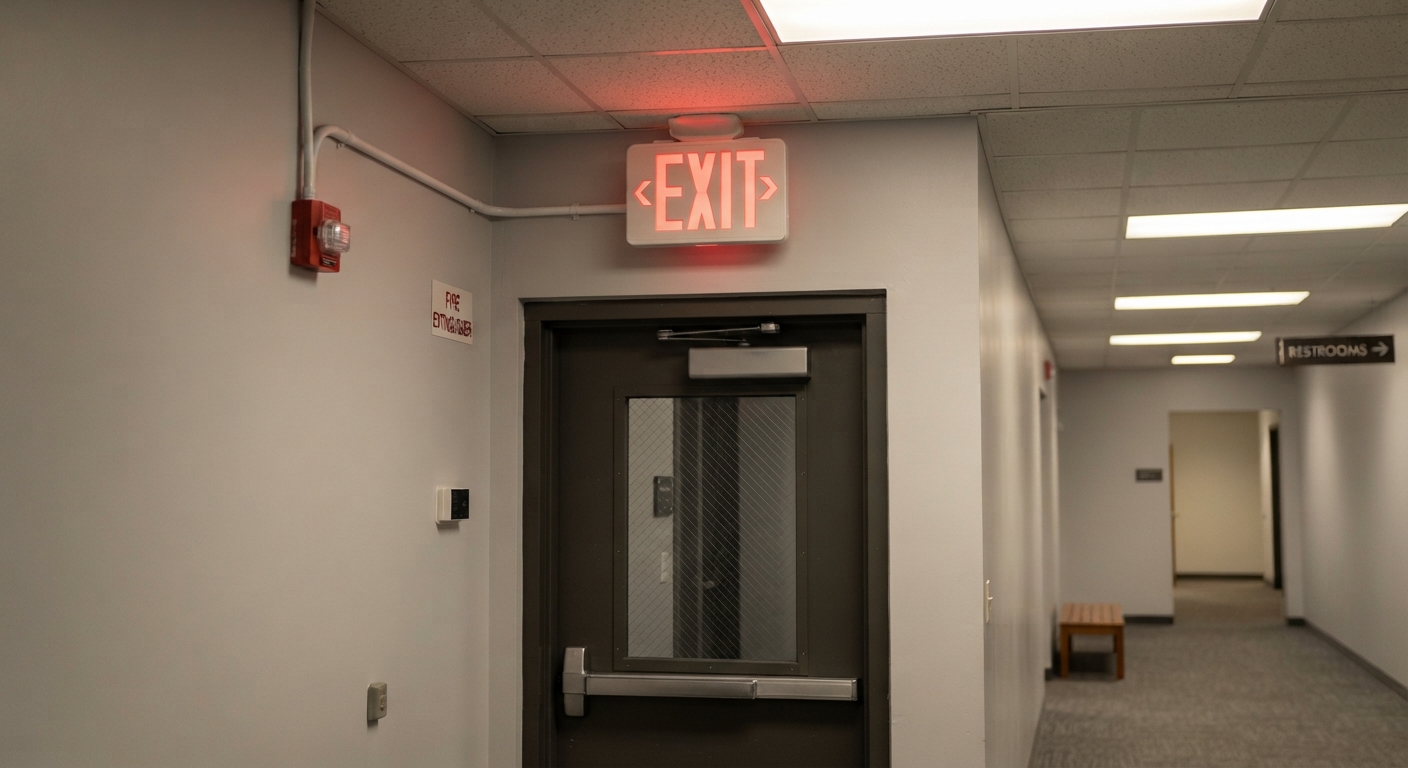
In a fire or power outage, visibility is survival. Emergency lighting and exit signs are critical components of a commercial building’s life safety system, guiding occupants to safety when it matters most.
NFPA 101 (Life Safety Code) and the IBC (International Building Code) set strict requirements for emergency lighting and exit signs to ensure they function reliably during emergencies.
This guide covers:
-
Exit sign requirements (placement, illumination, and visibility).
-
Emergency lighting requirements (duration, illumination levels, and testing).
-
Common violations and how to avoid them.
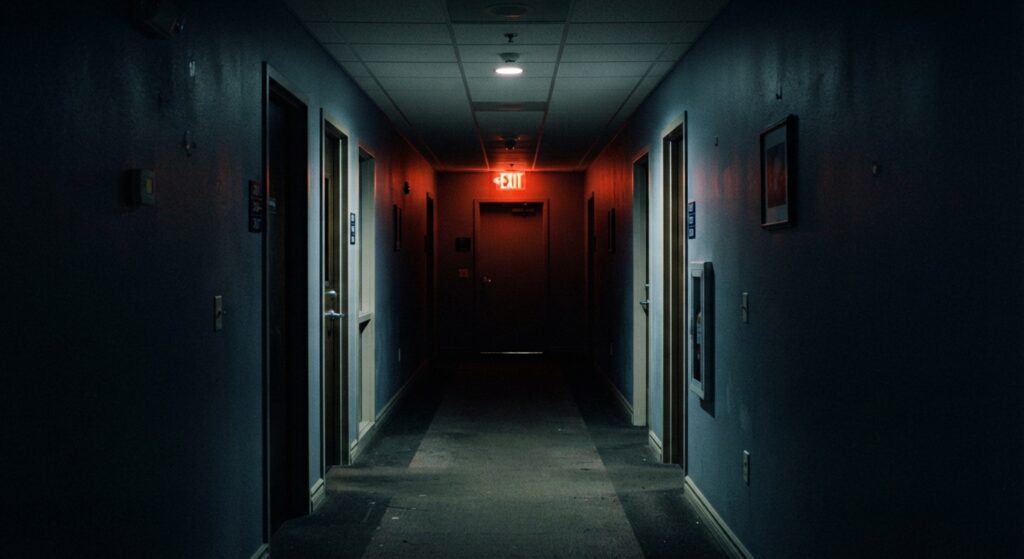
Section 1: Exit Sign Requirements (NFPA 101 Section 7.10)
Exit signs are required in all commercial buildings to clearly mark the path of egress.
| Requirement | Details | Code Reference |
| Location | At every exit door, exit access doorway, and along the path of egress where the direction of travel is not obvious. | NFPA 101, 7.10.3 |
| Visibility | Must be clearly visible from any direction of approach. | NFPA 101, 7.10.2 |
| Illumination | Must be illuminated at all times (internally or externally). | NFPA 101, 7.10.4 |
| Lettering | The word “EXIT” must be in red or green letters (per local jurisdiction), at least 6 inches high. | NFPA 101, 7.10.2 |
| Background | High contrast between letters and background. | NFPA 101, 7.10.2 |
| Emergency Power | Must be connected to emergency power (battery backup or generator). | NFPA 101, 7.10.6 |
Common Violation: Exit signs that are blocked by doors, equipment, or storage.

Section 2: Exit Sign Placement
Exit signs must be placed strategically to guide occupants to safety.
| Location | Requirement |
| Exit Doors | A sign must be mounted above or directly adjacent to every exit door. |
| Exit Access | Signs must be placed at every change in direction along the egress path. |
| Corridors | If the path is long, additional signs should be placed to indicate the direction of travel. |
| High-Occupancy Areas | Additional signs may be required in assembly occupancies (theaters, arenas) to manage crowd flow. |
Section 3: Emergency Lighting Requirements (NFPA 101 Section 7.9)
Emergency lighting ensures that occupants can see the path of egress during a power outage or fire event.
| Requirement | Details | Code Reference |
| Illumination Level | Minimum of 1 foot-candle (10 lux) measured at the walking surface. | NFPA 101, 7.9.2 |
| Duration | Must remain illuminated for at least 90 minutes after power failure. | NFPA 101, 7.9.2 |
| Location | Required in all corridors, exit stairs, and exit discharge areas. | NFPA 101, 7.9.1 |
| Automatic Activation | Must activate automatically when normal power fails. | NFPA 101, 7.9.2 |
| Independent Testing | Systems must be tested monthly and annually (NFPA 10). | NFPA 101, 7.9.3 |
Common Violation: Emergency lights that are blocked by furniture, not working (dead batteries), or not tested regularly.
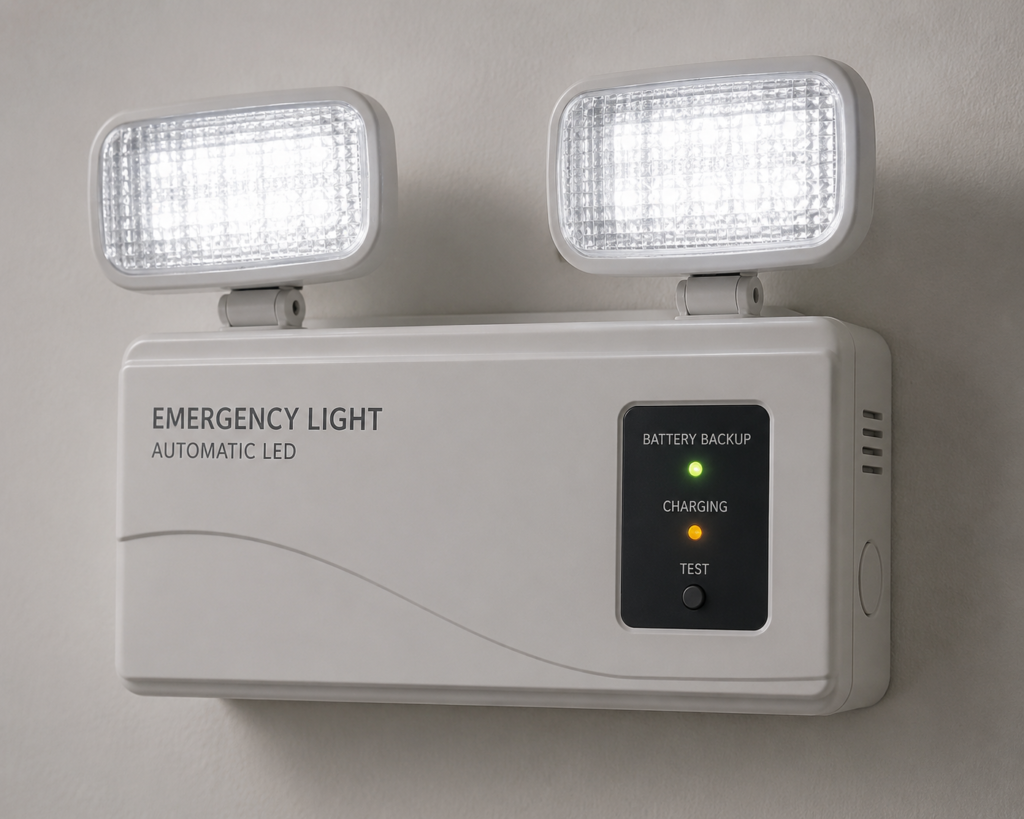
Section 4: Types of Emergency Lighting Systems
| System | Description | Best Use |
| Unit Equipment (Battery Packs) | Individual fixtures with self-contained battery backup. | Small to medium commercial buildings. |
| Generator Systems | Central generator powers all emergency lights during an outage. | Large commercial buildings, hospitals, high-rises. |
| Central Inverter Systems | Central battery system provides backup to multiple fixtures. | Larger buildings where generator is not feasible. |
Pro Tip: For small buildings, battery-powered unit equipment is the most cost-effective solution. For large buildings, a generator system provides longer runtime and greater reliability.
Section 5: Testing and Maintenance Requirements
Both exit signs and emergency lighting must be regularly tested to ensure they function properly.
| System | Testing | Frequency | Procedure |
| Emergency Lights | Visual Inspection | Monthly | Check lights are on, clean, and not blocked. |
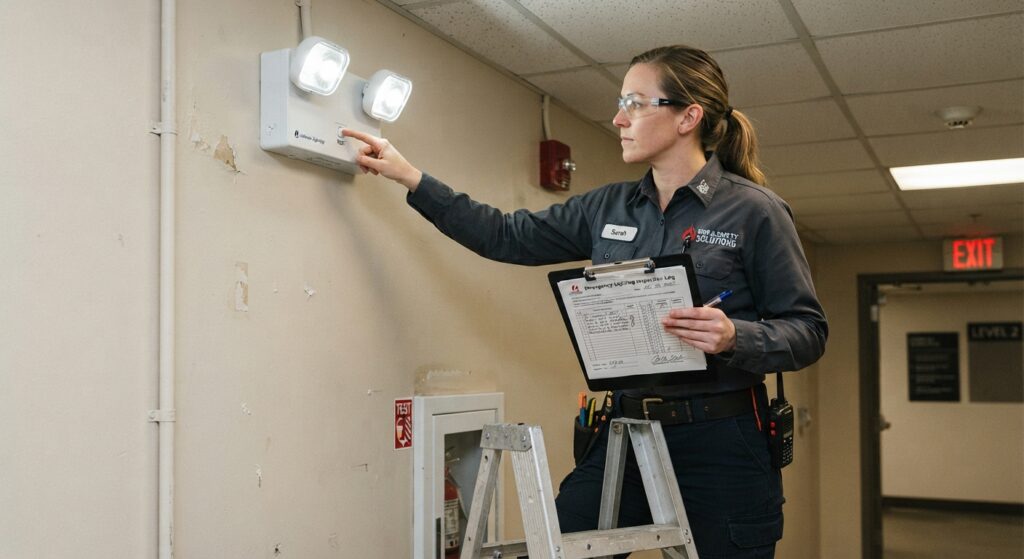
| Emergency Lights | Functional Test | Monthly | Press test button or switch to battery power. Ensure lights illuminate at full brightness. |
| Emergency Lights | Full Duration Test | Annually | Simulate power failure for 90 minutes. Ensure lights stay on for the full duration. |
| Exit Signs | Visual Inspection | Monthly | Check signs are illuminated, clean, and unobstructed. |
| Exit Signs | Battery Test | Annually | Test battery backup (if equipped) for 90 minutes. |
Documentation: All tests must be recorded and retained for inspection by authorities. (NFPA 10 requires records for at least 3 years.)
Section 6: Common Violations and How to Avoid Them
| Violation | Why It’s a Problem | How to Fix |
|---|---|---|
| Blocked or obstructed exit signs | Occupants cannot see the path of egress. | Keep area around exit signs clear at all times. |
| Dead or missing batteries | Emergency lights fail during power outages. | Replace batteries annually or as recommended. |
| Insufficient illumination | Path of egress is not visible in an emergency. | Verify proper illumination levels; add additional emergency lights as needed. |
| Missing documentation | Inspectors cannot verify compliance. | Maintain inspection logs. |
| Exit signs not connected to emergency power | Exit signs may fail during a power outage. | Verify connection to battery backup or generator. |
Conclusion
Emergency lighting and exit signs are non-negotiable life-safety features in commercial buildings. They ensure that occupants can safely evacuate during a fire or power outage.
Take Action Today:
-
Inspect all exit signs to ensure they are illuminated, visible, and unobstructed.
-
Test emergency lights using the monthly and annual test procedures.
-
Replace dead batteries immediately.
-
Maintain inspection logs to demonstrate compliance.