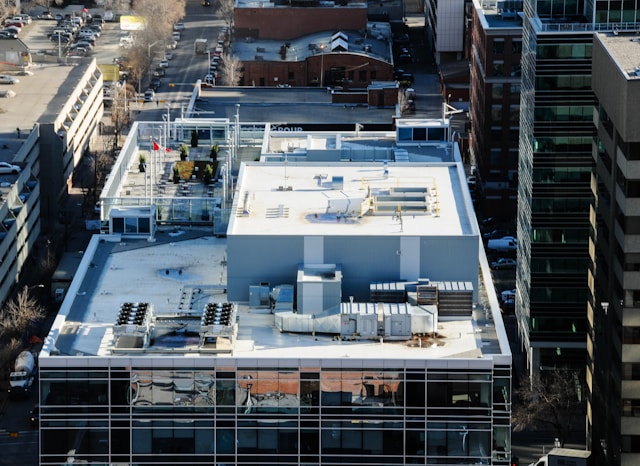
The roof is one of the most vulnerable parts of a commercial building during a fire. Because it is the uppermost exterior surface, it is directly exposed to flying embers, radiant heat, and direct flame contact from adjacent structures or wildfires.
If the roof covering fails, flames can quickly penetrate the interior, leading to rapid structural collapse and total loss of the building. Choosing the right roofing material with the correct fire rating is not just an aesthetic or budgetary choice—it is a critical life-safety decision.
This guide breaks down the fire rating classifications for commercial roofing materials, the IBC requirements, and the best materials to specify for your next project.
Section 1: Understanding Roof Fire Ratings (ASTM E108 / UL 790)
In the United States, roof fire resistance is determined by ASTM E108 or UL 790 (Standard Test Methods for Fire Tests of Roof Coverings). These tests simulate fire exposure from the exterior.
Roof assemblies are classified into three categories based on their performance against flame spread, burning brand penetration, and flaming debris:
| Class | Description | Typical Materials |
|---|---|---|
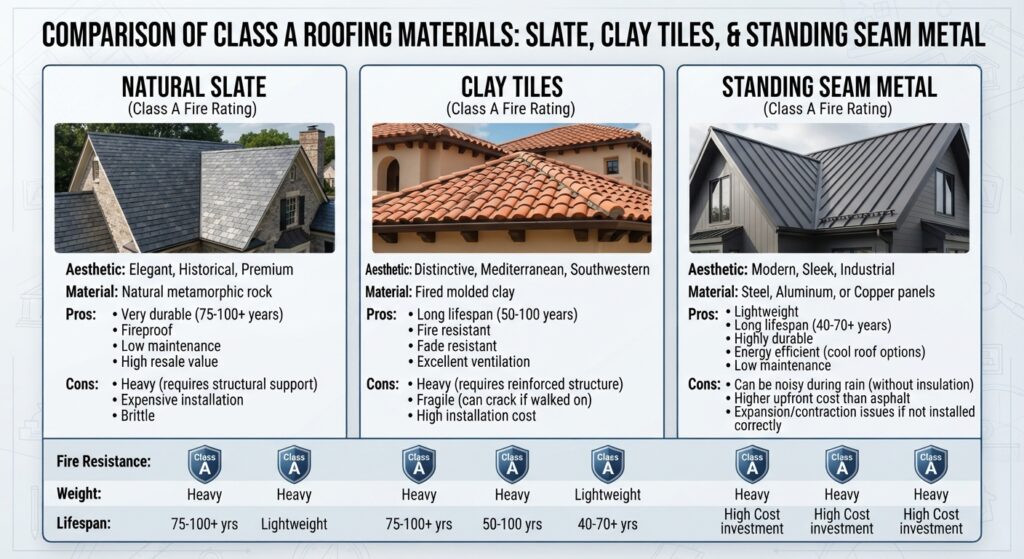
| Class A (Highest) | Effective against severe fire exposure. Can withstand heavy flying embers and moderate flame spread. | Slate, clay tiles, concrete tiles, asphalt shingles (with special fire-resistant underlayment), metal roofs (steel/copper). |
| Class B | Effective against moderate fire exposure. Can withstand light ember attacks. | Pressure-treated wood shakes, some asphalt shingles (standard). |
| Class C (Lowest) | Effective against light fire exposure. Minimal ember resistance. | Standard untreated wood shakes, some organic shingles (rarely used in commercial). |
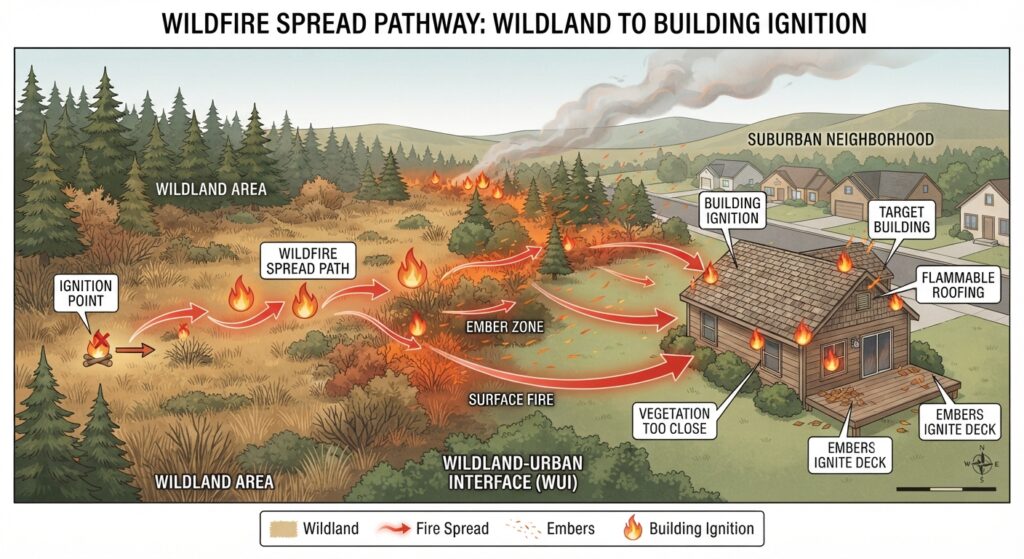
Pro Tip for Architects: Class A is the standard for most commercial buildings in urban areas and is always required in wildfire-prone zones (Wildland-Urban Interface).
Section 2: IBC Roofing Requirements
The International Building Code (IBC) dictates where these roof classes must be used. The requirements are generally based on the building’s construction type and proximity to property lines.
IBC Key Highlights:
-
Chapter 15, Section 1505 covers roof requirements.
-
Non-Combustible Construction (Type I & II): Roof coverings must have a Class A, B, or C rating depending on the fire separation distance from the lot line.
-
Combustible Construction (Type III, IV, V): If the structure itself is made of combustible materials (wood), the roof covering usually requires a Class A or B rating to protect the underlying structure.
-
Wildland-Urban Interface (WUI): In states like California and Colorado, local codes mandate Class A roofing for any new construction in WUI zones to protect against wildfires.
Section 3: Commercial Roofing Material Options & Fire Performance
Here is how the most common commercial roofing materials stack up regarding fire safety:
| Material | Typical Rating | Best Use Case |
|---|---|---|
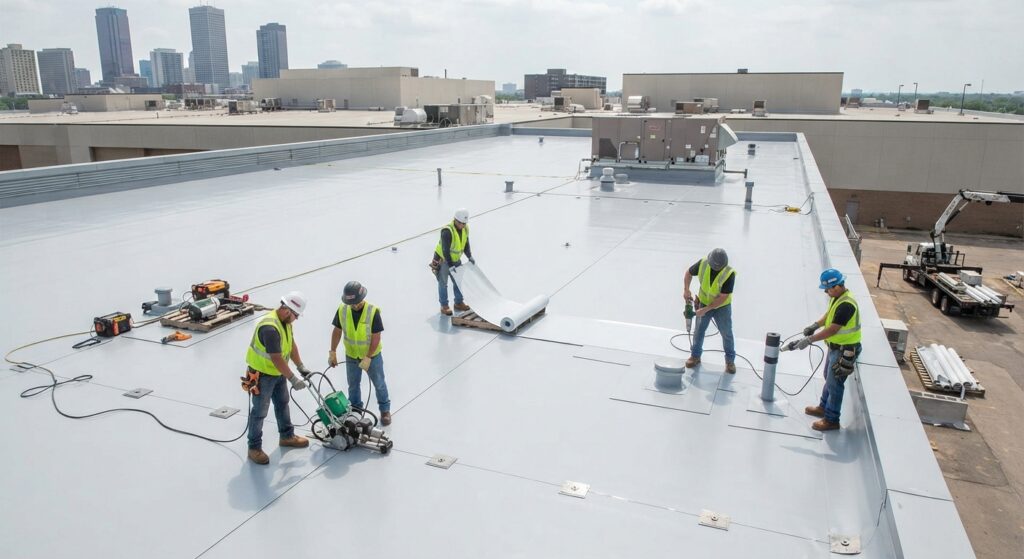
| TPO/PVC (Single-Ply) | Class A (with proper ballast or adhesive) | Large flat roofs, strip malls. Extremely popular and affordable. |
| EPDM (Rubber Roof) | Class A (with ballast/cover board) | Flat roofs for large industrial spaces. |
| Built-Up Roofing (BUR) | Class A | Traditional flat roofs with gravel layers. Very heavy but highly fire-resistant. |
| Modified Bitumen | Class A (depending on top coating) | Flat roofs with a smooth or granular surface. |
| Metal Roofing (Standing Seam) | Class A | High-end commercial, architectural designs, and high wind zones. Non-combustible. |
| Clay/Concrete Tile | Class A | High-end retail, schools, and Mediterranean-style architecture. |
| Asphalt Shingles | Class A, B, or C | Usually on sloped roofs; high-end laminated shingles often achieve Class A. |
Section 4: The Importance of the Roof Deck and Underlayment
The fire rating of the covering is only half the story.
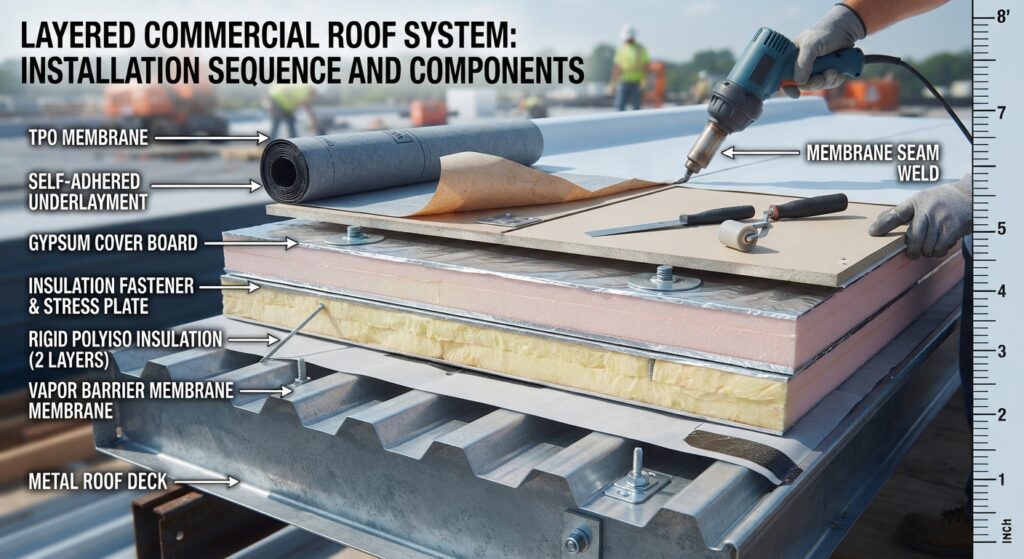
The roof deck (the structural base) and underlayment (the barrier between the deck and the covering) play a vital role.
-
Non-Combustible Decks: Steel or concrete decks are naturally fire-resistant and support high fire ratings.
-
Combustible Decks: Plywood or wood plank decks are vulnerable. If you use a combustible deck, you must install an approved fire-retardant treated plywood or use a Class A underlayment.
-
Insulation: Some rigid foam insulations (like Polyiso) are fire-rated and can be left exposed in specific assemblies, but they usually require a thermal barrier.
Common Code Violation: Installing a Class A roof covering over a combustible wood deck without a proper fire-rated underlayment. This renders the Class A covering useless because the embers will burn through the deck anyway.
Section 5: Special Considerations
-
Vegetative (Green) Roofs: Plants and soil act as excellent fire barriers (Class A), but care must be taken to ensure the irrigation systems work and the plants are non-flammable.
-
Photovoltaic (Solar) Panels: Adding solar panels changes the fire rating of the roof. IFC (International Fire Code) requires panels to be located to allow firefighter access and not void the Class A rating of the roof below.
-
Maintenance: A Class A roof can lose its rating if it is damaged, has standing water degrading the membrane, or has debris (leaves, trash) accumulating on the surface.
Conclusion
Selecting a commercial roof is a high-stakes decision that directly impacts the building’s safety and insurability.
Take Action Today:
-
Verify your current roof’s rating by checking the manufacturer’s label.
-
If designing new, specify Class A materials regardless of the minimum code—it provides the best protection and resale value.
-
Inspect your roof yearly to ensure no damage has compromised its fire resistance.