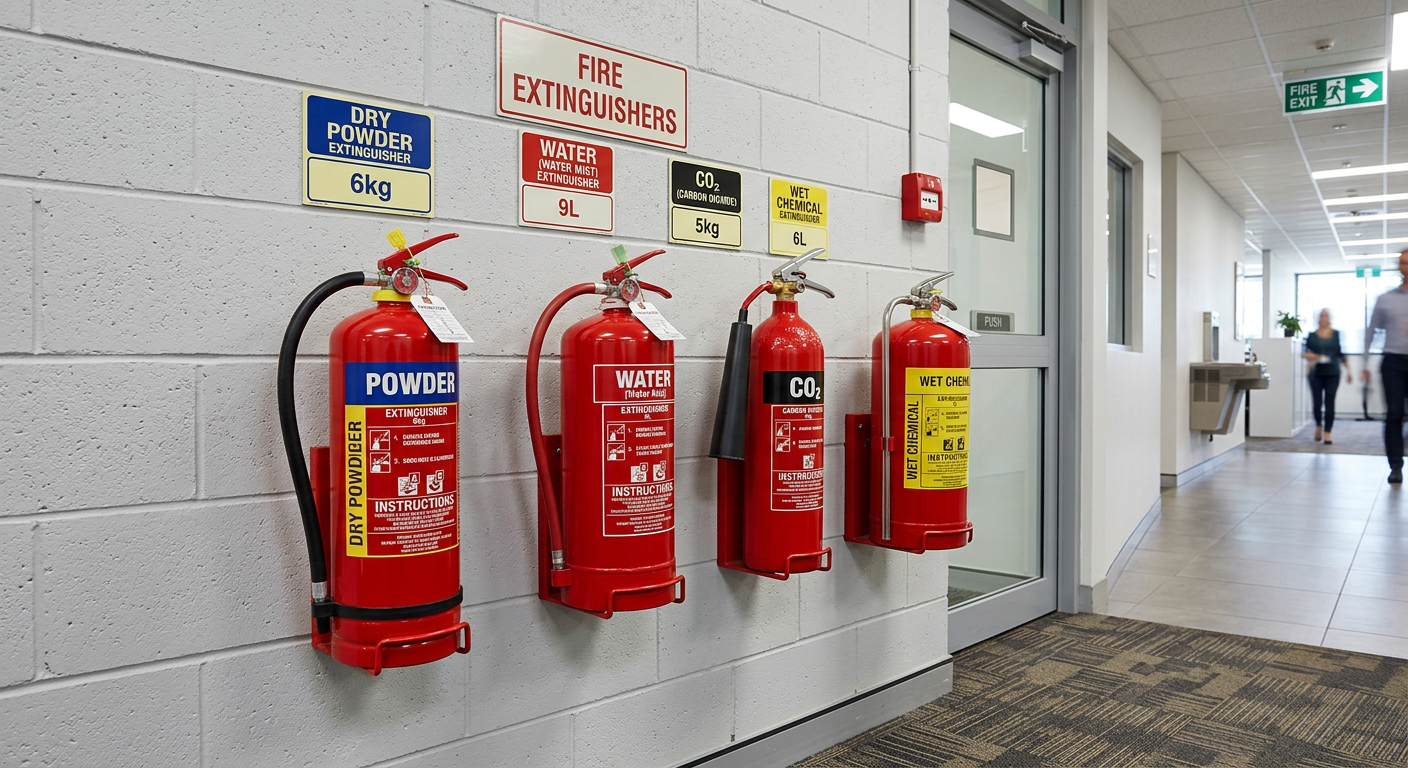
Fire extinguishers are your first line of defense against small fires in commercial buildings. However, not all extinguishers are created equal—and placing the wrong type in the wrong location can be a costly mistake.
Industry research indicates that approximately 80% of fires are successfully extinguished using a portable fire extinguisher before the fire department arrives [1]. Having the right extinguisher, properly placed and maintained, can mean the difference between a minor incident and a catastrophic loss.
This guide covers the five main types of fire extinguishers, their uses, and NFPA 10 placement requirements for commercial buildings.
The Five Main Types of Fire Extinguishers
Fire extinguishers are classified by the type of fire they are designed to extinguish. Using the wrong type can be ineffective or even dangerous.
| Type | Class | Fire Class | Typical Use | Color Code |
|---|---|---|---|---|
| Water | Class A | Ordinary combustibles (wood, paper, cloth, plastic) | Offices, schools, warehouses | Red |
| Carbon Dioxide (CO2) | Class B & C | Flammable liquids (gas, oil, grease) and electrical fires | Kitchens, server rooms, mechanical rooms | Red (with black band) |
| Dry Chemical | Class A, B, C | Multi-purpose (most common) | General commercial use | Red (with white band) |
| Wet Chemical | Class K | Cooking oils and fats (commercial kitchens) | Commercial kitchens, restaurants | Red (with yellow band) |
| Dry Powder | Class D | Combustible metals (magnesium, titanium, aluminum) | Industrial settings, metalworking | Red (with blue band) |
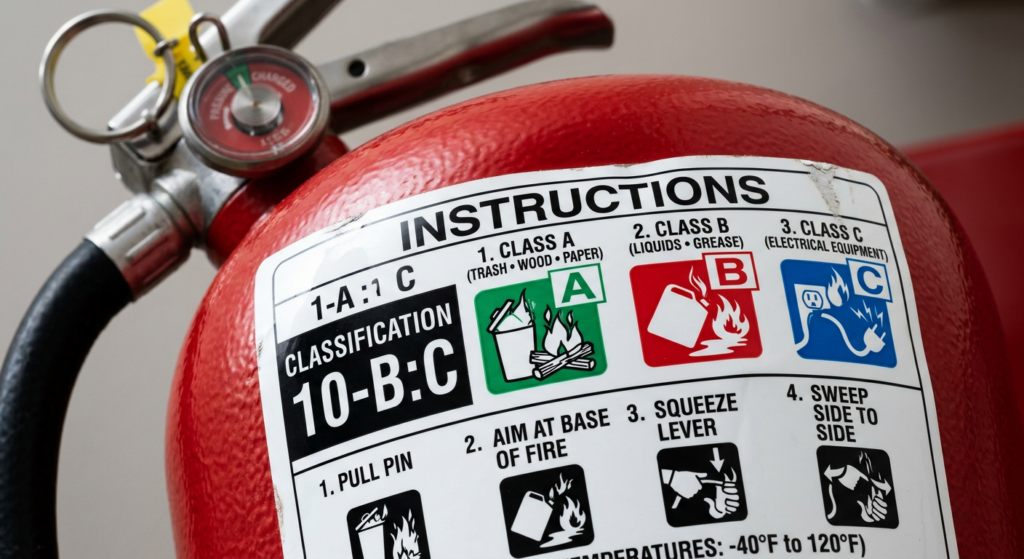
Section 1: Choosing the Right Extinguisher for Your Building
Selecting the right fire extinguisher depends on the type of fire hazards present in your building.
| Occupancy Type | Recommended Extinguisher | Reason |
|---|---|---|
| Office (Business) | Dry Chemical (ABC) | Covers paper, electrical equipment, and general office hazards. |
| Commercial Kitchen | Wet Chemical (Class K) + Dry Chemical (ABC) | Class K for cooking oil fires; ABC for other fires. |
| Server Room / Data Center | Carbon Dioxide (CO2) | Leaves no residue and is safe for sensitive electronics. |
| Warehouse / Storage | Dry Chemical (ABC) | Covers a wide range of potential fire hazards. |
| Industrial / Manufacturing | Dry Powder (Class D) or specialized extinguishers | Based on specific materials being handled. |
Compliance Tip: NFPA 10 requires that extinguishers be selected based on the specific fire hazards present in the area. A single type may not be sufficient for all areas of your building.
Section 2: NFPA 10 Placement Requirements
NFPA 10 sets specific requirements for the placement and distribution of fire extinguishers in commercial buildings.
| Requirement | Details | Code Reference [2] |
|---|---|---|
| Accessibility | Extinguishers must be readily accessible and not blocked by furniture or equipment. | NFPA 10, 6.1.3 |
| Mounting Height | Handle must be no more than 3.5 feet (1.07 m) above the floor for extinguishers weighing over 40 lbs, and no more than 5 feet (1.5 m) for those under 40 lbs. | NFPA 10, 6.1.3.9 |
| Travel Distance (Class A) | Maximum travel distance to an extinguisher is 75 feet (22.9 m). | NFPA 10, 6.2.1.1 |
| Travel Distance (Class B) | Maximum travel distance is 50 feet (15.2 m) for flammable liquid hazards. | NFPA 10, 6.3.1.1 |
| Travel Distance (Class C) | No maximum distance, but extinguishers should be located where electrical hazards exist. | NFPA 10, 6.4 |
| Visibility | Extinguishers must be visible or marked with a clearly visible sign. | NFPA 10, 6.1.3.10 |
| Mounting | Extinguishers must be mounted on a wall or placed in a stand/cabinet. | NFPA 10, 6.1.3.8 |
Common Violations:
- Extinguishers placed too high or too low.
- Extinguishers blocked by storage or furniture.
- Missing or damaged signage.
- Extinguishers not inspected monthly.
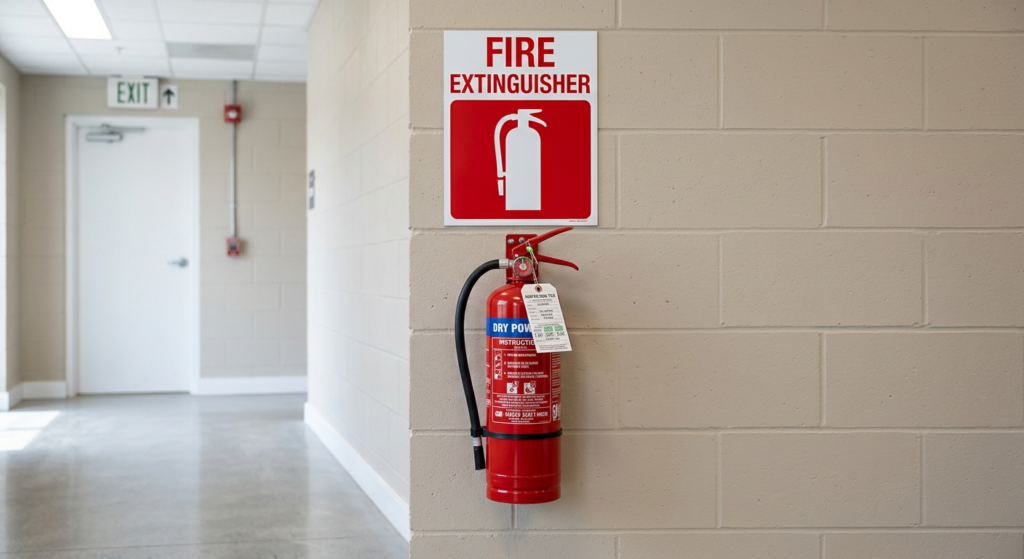
Section 3: Installation and Mounting Requirements
Proper installation ensures that extinguishers are secure, accessible, and compliant with NFPA 10.
| Requirement | Details |
|---|---|
| Mounting Bracket | Extinguishers must be securely mounted to prevent falling. |
| Wall Clearance | Extinguishers must be installed with sufficient clearance to allow full extinguisher removal from the wall for larger models. |
| Cabinets | Extinguishers in cabinets must be visible through a glass panel or marked with a sign. |
| Floor Stands | Extinguishers over 40 lbs may be placed on floor stands, but they must be secured. |
Pro Tip: Always follow the manufacturer’s installation instructions for the specific extinguisher model.
Section 4: Inspection and Maintenance
Fire extinguishers require regular inspection and maintenance to remain operational.
| Inspection Type | Frequency | What to Check [2] |
|---|---|---|
| Visual Inspection | Monthly | Pressure gauge in the green zone, no visible damage, pin and seal intact, accessible location. |
| Maintenance Check | Annually | Professional inspection of mechanical parts, refilling if needed. |
| Hydrostatic Testing | Every 5–12 years | Pressure testing to ensure the cylinder is safe for use. |
Compliance Tip: Document all inspections and maintenance activities. This is essential for regulatory compliance and insurance purposes.

Section 5: Common Mistakes and How to Avoid Them
| Mistake | Why It’s a Problem | How to Fix |
|---|---|---|
| Using the wrong type of extinguisher | Can be ineffective or dangerous for the fire class. | Identify the fire hazards in each area and choose the correct type. |
| Extinguisher blocked by storage | Delays access during an emergency. | Keep the area around extinguishers clear at all times. |
| Extinguisher mounted too high | Difficult for shorter staff to access. | Mount at the correct height (handle 3.5–5 feet above floor). |
| Not conducting monthly inspections | Extinguisher may be discharged or damaged when needed. | Assign a staff member to conduct monthly visual inspections. |
| Using outdated or damaged extinguishers | May fail to operate correctly. | Replace or service extinguishers that are expired or damaged. |
Conclusion
Fire extinguishers are a critical component of any commercial building’s fire safety plan. By selecting the right types for your hazards and following NFPA 10 placement requirements, you can protect your building, your occupants, and your business.
Take Action Today:
- Audit your extinguishers—identify the types and locations.
- Check mounting heights and travel distances to ensure compliance.
- Schedule a professional maintenance check for all extinguishers.
- Train staff on how to use extinguishers correctly.
References & Notes
[1] EnGauge Inc. fire extinguisher effectiveness research, as cited in industry safety compilations; National Association of Fire Equipment Distributors (NAFED), “The Effectiveness of Portable Fire Extinguishers: An Overview,” 1976–2010 survey data. Note: this figure is widely attributed to NFPA in secondary sources, but does not appear as a published NFPA statistic itself.
[2] NFPA 10, Standard for Portable Fire Extinguishers, 2024 Edition — Sections 6.1.3 (Mounting, Location, and Marking), 6.2.1.1 (Class A Travel Distance), 6.3.1.1 (Class B Travel Distance), 6.4 (Class C Hazards), and Chapter 7 (Inspection, Maintenance, and Recharging).