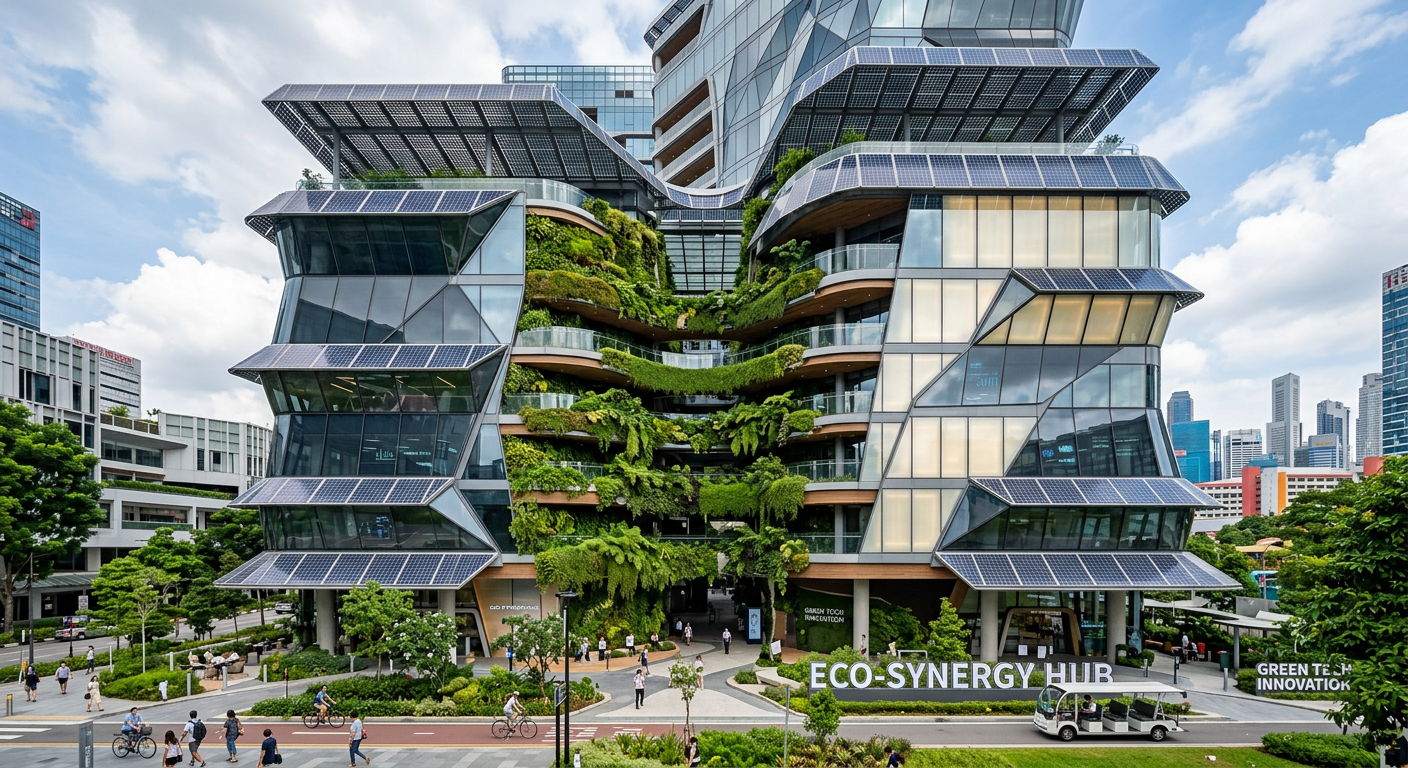
The commercial building is undergoing a fundamental transformation. The days of static, energy-hogging structures with disconnected fire safety systems are numbered. In their place, a new generation of buildings is emerging—ones that are autonomous, sustainable, and intelligent.
This article explores the key trends shaping the future of commercial buildings, drawing on real-world examples and expert insights from the industry. From the world’s tallest hybrid timber tower to AI-driven fire safety, here is what the future holds.
Section 1: The Rise of Autonomous Buildings
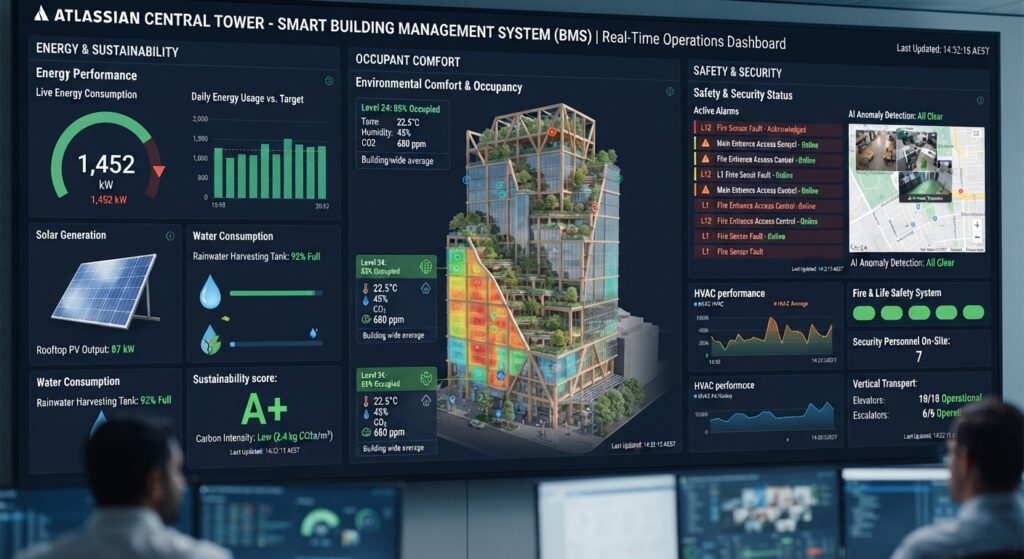
One of the most significant shifts is the move toward autonomous buildings—systems that anticipate demand, optimize performance and maintenance, and respond to changing conditions over time.
Siemens, a global leader in smart infrastructure, defines this as a shift from conventional smart building management to more autonomous operation, with a focus on energy use, maintenance, and occupant experience.
Key Features of Autonomous Buildings:
| Feature | How It Works |
|---|---|
| Demand Anticipation | Systems predict energy needs and adjust HVAC and lighting accordingly. |
| Predictive Maintenance | IoT sensors monitor equipment health and schedule repairs before failures occur. |
| Adaptive Response | The building responds to changing occupancy, weather, and energy prices. |
| Integrated Platforms | Digital platforms like Siemens’ Building X provide a single interface for energy management, comfort, safety, and maintenance. |
Why It Matters: Autonomous buildings are not just about efficiency—they are about resilience and asset value. As workforce shortages and aging systems challenge building operators, automation provides a path forward.
Section 2: Sustainability as a Non-Negotiable
Sustainability is no longer a “nice-to-have”—it is a regulatory and market necessity. In China, for example, building permits are often only granted to developers who commit to meeting established sustainable design standards.
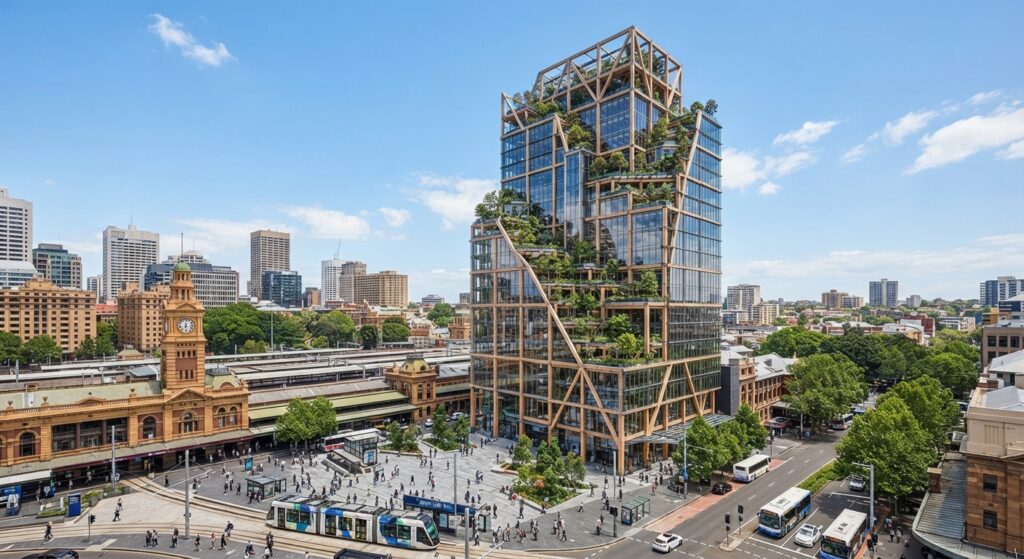
The World’s Tallest Hybrid Timber Tower: Atlassian Central
A landmark example is Atlassian Central in Sydney, Australia, which recently became the world’s tallest hybrid timber tower at 39 storeys and over 180 metres high .
| Aspect | Details |
|---|---|
| Structure | Combines mass timber with steel and concrete. |
| Carbon Reduction | Targeting a 50% reduction in upfront embodied carbon compared to a conventional office tower. |
| Energy Efficiency | Targeting a 50% improvement in operational energy efficiency. |
| Design Philosophy | Features a four-storey “habitat” structure that blends natural materials with light and ventilation. |
Key Takeaway: Hybrid timber towers are not just a sustainability statement—they are a practical, scalable solution for reducing the carbon footprint of large-scale commercial buildings.
Section 3: Smart Fire Safety and Life Safety
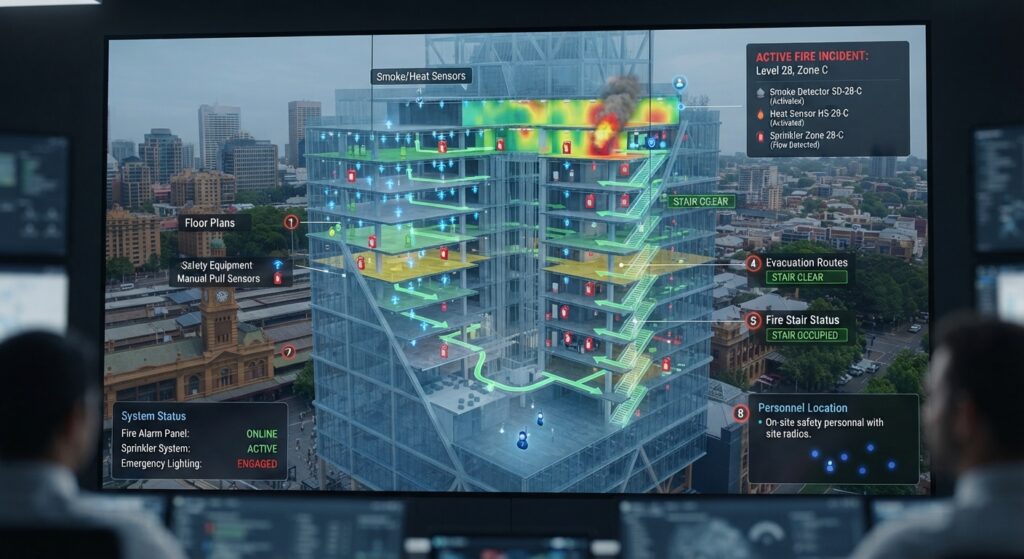
Fire safety is being transformed by smart building technology. Advanced fire systems are now scalable, secure, and efficient, with access to real-time building information.
Key Innovations in Smart Fire Safety:
| Innovation | How It Works | Benefit |
|---|---|---|
| AI-Powered Detection | Artificial intelligence enhances detection accuracy and reduces false alarms. | Fewer nuisance alarms, faster and more reliable fire detection, and reduced operational disruption. |
| Remote Monitoring | Technicians can diagnose issues without being on site, though repairs still require in-person visits. | Faster troubleshooting, reduced downtime, lower maintenance costs, and minimized disruption to building operations. |
| Digital Twins | A digital twin coordinates BIM and IoT technologies to project the physical world into the digital world, enabling real-time forecasting and decision support. | Improved decision-making, predictive fire behavior modeling, enhanced training for first responders, and optimized system performance. |
| Integration with Building Systems | Fire alarms integrate with HVAC, lighting, and security systems for a coordinated response. | Seamless emergency response, improved occupant safety, and optimized building system performance during and after emergencies. |
A Real-World Example: SureFire
The Hong Kong University of Science and Technology is developing SureFire, an AI-based tool that provides timely forecasts of critical events to assist firefighters in making informed decisions. The system uses:
-
Digital Twin Technology to dynamically project the physical world into the digital world.
-
IoT Sensors to continuously monitor buildings.
-
AI Subsystems to generate forecasts and relay decision support information to fire crews.
The NFPA’s Perspective:
An NFPA report acknowledges that while smart building technologies offer significant benefits, they also present challenges, including:
-
Cybersecurity risks.
-
Interoperability challenges between different systems.
-
Regulatory gaps that require updated codes and standards.
The report proposes a research roadmap addressing short-term (cybersecurity protocols, AI validation), medium-term (predictive maintenance, occupant tracking), and long-term (unified digital twin ecosystems, AI governance) priorities.
Section 4: Wellness-Centric Design
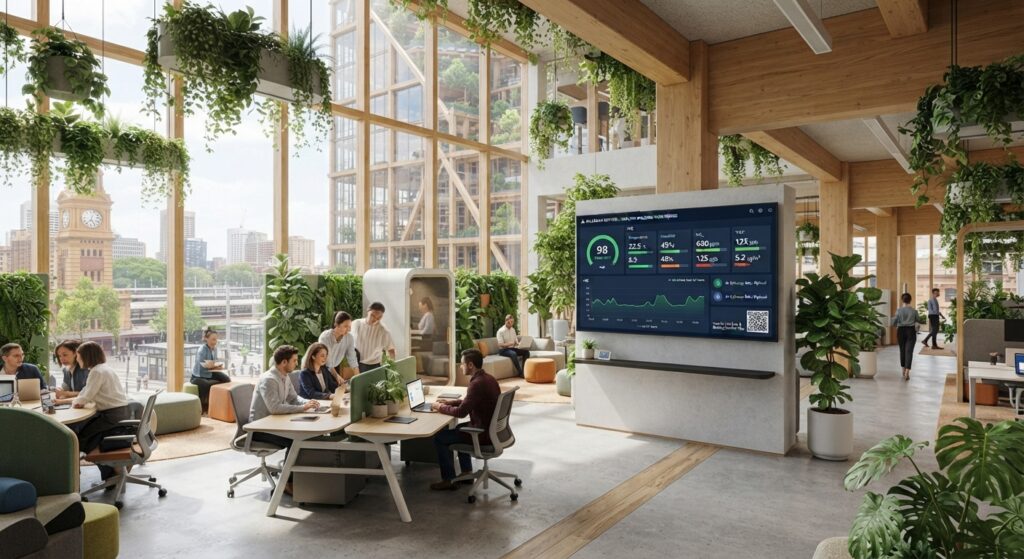
The future of commercial buildings is also human-centric. Buildings are increasingly designed to protect occupant health and well-being.
Health-Focused Office Design:
In Mumbai, for example, Superb Realty launched Superb Altura, a mixed-use commercial project designed to prioritize occupant well-being in a high-pollution environment.
| Feature | How It Works |
|---|---|
| IAQ Monitoring | Continuous monitoring of indoor air quality (IAQ) enables automated adjustments to air circulation and temperature. |
| Resilient Infrastructure | Buildings are designed to respond to climate and pollution pressures. |
| Predictive Maintenance | Sensors enable predictive maintenance, reducing operational waste and enhancing safety. |
Why It Matters: Health-focused office spaces are becoming a decisive factor in tenant attraction, retention, and rental valuation.
Section 5: Proptech and Data-Driven Decision Making
Proptech—property technology—is reshaping how buildings are designed, managed, and transacted. The global proptech market is projected to grow from $44.59 billion in 2026 to $104.57 billion by 2034.
Key Proptech Innovations:
| Category | Examples | Impact |
|---|---|---|
| Smart Building Management | IoT-enabled systems for energy, safety, and maintenance. | Operational efficiency and real-time insight. |
| Predictive Analytics | AI platforms that assess tenant durability and renewal probability. | Improved investment decisions and asset protection. |
| Construction Technology (ConTech) | BIM, 3D printing, modular construction. | Faster, more precise, and more sustainable construction. |
How AI is Changing Commercial Real Estate:
According to Bryn Feller, Managing Director at Northmarq, AI is introducing “an entirely new layer of analytical clarity” to a sector that has historically operated with “more intuition than instrumentation”.
“The future of commercial real estate will not belong to AI. It will belong to investors who know how to think with AI.”
— Bryn Feller, Managing Director, Northmarq
Key Insight: AI is not replacing the traditional toolkit of commercial real estate—it is amplifying it by turning disconnected data points into a coherent signal.
Section 6: Trends in Commercial Real Estate
Flexible and Smaller Spaces:
There is a growing demand for smaller, more flexible spaces across office, industrial, and retail sectors.
| Sector | Trend |
|---|---|
| Office | Large corporations are decentralizing, creating demand for spaces under 10,000 sq ft with shorter, flexible leases. |
| Industrial | Demand for smaller “last-mile” spaces (3,000 to 25,000 sq ft) is pushing prices higher. |
| Retail | Service-driven retail (fitness, salons, medical) is growing, while big-box vacancies remain. |
Data Centers vs. Traditional Offices:
Spending on data centers is expected to see continued healthy gains, while spending on traditional office spaces is expected to decline. This reflects the broader shift toward digital infrastructure and AI investment.
Section 7: The Road Ahead – Challenges and Opportunities
| Challenge | Opportunity |
|---|---|
| Cybersecurity Risks | Integrated security protocols and AI-driven threat detection. |
| Interoperability | Open architecture platforms that integrate diverse systems. |
| Regulatory Gaps | Updated codes and standards for smart buildings. |
| Legacy Systems | Retrofitting and scalable solutions for existing buildings. |
The Bottom Line: The future belongs to buildings that are safe, sustainable, and smart. Building owners and architects who embrace these trends will be well-positioned for success.
Conclusion
The commercial building of the future is being built today. From the world’s tallest hybrid timber tower in Sydney to AI-driven fire safety and wellness-centric design, the trends are clear:
1. Autonomy: Buildings that anticipate demand and optimize performance.
2. Sustainability: Net-zero carbon, hybrid structures, and energy efficiency.
3. Smart Safety: AI, digital twins, and integrated fire systems.
4. Wellness: Health-focused design that protects occupants.
5. Data-Driven Decisions: Proptech and AI amplifying traditional real estate expertise.
Take Action Today:
-
Stay informed about emerging technologies and regulatory changes.
-
Consider sustainability as a core design principle, not an afterthought.
-
Explore proptech solutions for your building management needs.
-
Invest in smart fire safety systems that integrate with your building operations.
Continue Reading from Our Series:
-
Read more about: Single Exit Staircase Provisions for Apartments and Penthouses
-
Learn more: Hazard Classification and Hazardous Areas
-
Related guide: Green Building Certifications for Commercial Properties